


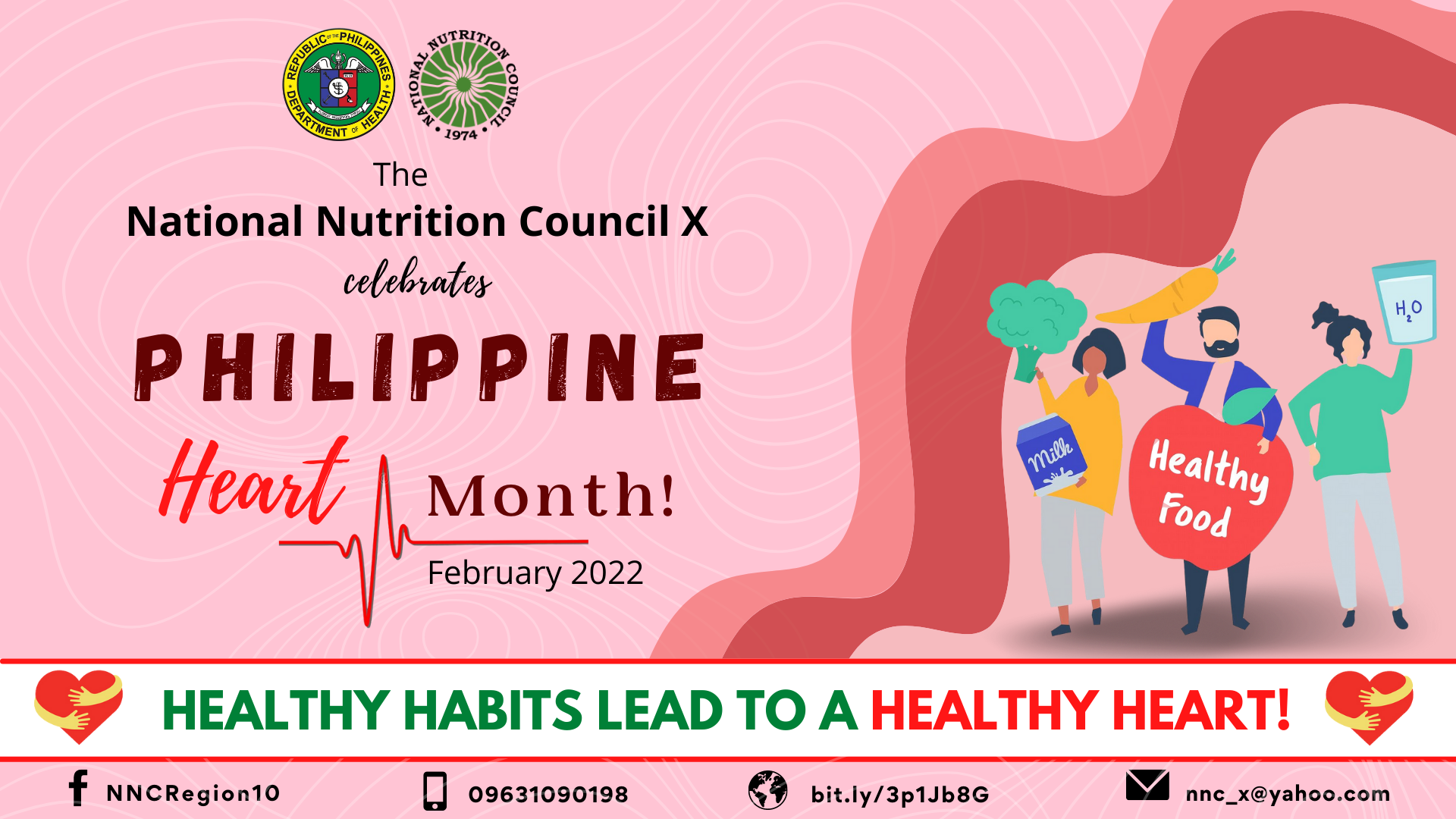
 By virtue of Proclamation No. 1096 signed on 9 January 1973, February is declared as Philippine Heart Month. It is an annual event that strengthens the advocacy of maintaining a healthy heart through raising awareness on heart and circulatory diseases across the country.
According to World Health Organization (WHO), cardiovascular diseases (CVDs) are the world’s leading cause of deaths wherein it accounts to an estimated staggering 17.9 million deaths each year.
The term “cardiovascular disease” refers to a group of disorders that affect the heart and blood vessels. This disease is usually associated with a build-up of fatty plaques in the arteries and increased risk of blood clots, making it harder for blood to flow through that when left untreated, can lead to death.
So how do we prevent heart diseases? Keeping our heart healthy needs self-discipline. The majority of cardiovascular illnesses can be avoided by addressing behavioral risk factors such as poor lifestyle, poor diet, physical inactivity, obesity, and dangerous tobacco and alcohol use. And it is never too late to start changing your ways towards a healthier heart.
Here are some ways you can reduce the risk in developing CVDs:
1. Cessation of tobacco.
Tobacco use and exposure to second-hand smoke is very dangerous to your health. Tobacco smoke contains carbon monoxide that can cause plaque build-up in our blood vessels which reduce the amount of oxygen the blood carries throughout the body. It can cause inflammation, vasoconstriction, clot formation and elevated blood pressure. Overtime, it may lead to catastrophic damage to our cardiovascular system. Hence, reducing use of tobacco is substantial in preventing the damage in your cardiovascular system. Quitting earlier yield to greater health benefits at any age!
2. Cut down on alcohol.
Alcohol consumption has complex effects on our cardiovascular system. The key is moderation. The safe level of alcohol consumption for men is no more than two drinks or 20 g of pure alcohol a day, while women are recommended to consume only one drink, and 10 g of pure alcohol.
3. Exercise regularly.
Physical activity contributes to reduction in body weight, blood pressure and bad cholesterol levels. Regular exercise has beneficial effects to your over-all health, well-being and lifestyle habits. It is recommended to engage in physical activity spanning 30 to 60 minutes daily.
4. Maintain a healthy weight.
Obesity and overweight are two factors that have been related to an increased risk of cardiovascular disease. Obese people need more blood to supply oxygen and nourishment to their bodies, which leads to high blood pressure. To circulate this blood, your body will demand extra pressure. High blood pressure is the leading cause of heart attacks, which are unfortunately more common in obese and overweight people. It is critical to maintain a healthy weight for your health. Losing weight can be difficult, but it can have a significant impact on the overall risk factors for heart disease.
5. Eating a heart-healthy diet.
One of the most powerful defenses against heart disease is a heart-healthy diet. Fruits, vegetables, whole grains, legumes, and nuts are all part of a heart-healthy diet. In fact, the World Health Organization (WHO) has given five (5) dietary recommendations for a heart-healthy diet:
- Consume roughly the same number of calories as your body consumes. “Calories in” minus “Calories out” equals a healthy body weight.
- Vegetables, legumes, whole grains, fruits, and nuts are all good sources of plant-based nutrition.
- Limit your fat intake, opting for unsaturated fats over saturated and trans fats for better health.
- Consume no more than 10 grams of granulated sugar every day.
- Limit your sodium intake from all sources.
This heart month, build your healthy habits and start your journey now to a healthier heart! (PNFP Lizelle L. Bete)
References:
Cardiovascular diseases (CVDs). (2021, June 11). World Health Organization. https://www.who.int/news-room/fact-sheets/detail/cardiovascular-diseases-(cvds)
NHS website. (2021, November 29). Cardiovascular disease. Nhs.Uk. https://www.nhs.uk/conditions/cardiovascular-disease/
Drinking Guidelines: General Population. (2019). International Alliance for Responsible Drinking. https://iard.org/science-resources/detail/Drinking-Guidelines-General-Population
Proclamation No. 1096, s. 1973 | GOVPH. (1973, January 9). Official Gazette of the Republic of the Philippines. https://www.officialgazette.gov.ph/1973/01/09/proclamation-no-1096-s-1973/
Healthy diet. (2020, April 29). World Health Organization. https://www.who.int/news-room/fact-sheets/detail/healthy-diet