


 Non-communicable diseases (NCDs) namely, cardiovascular disease, cancer, diabetes and chronic respiratory disease are already considered a universal public health concern. NCDs are a result of both genetic and behavioral factors (WHO, 2017). They account for 60% of total deaths globally and 40% burdens the people with the disease annually (WPRO, 2009). Based on the 2017 report of the Quezon City Health Department, 6 out of the 10 leading causes of mortality are NCDs namely, cancer, hypertension, myocardial infarction, diabetes mellitus, cardiovascular disease and disease of the heart.
Unfortunately, Filipino adults are continuously exposed to the different risk factors of NCDs including unhealthy diet. Based on the National Nutrition Survey of the Food and Nutrition Research Institute, a steady decline of fruits and vegetable in the consumption of Filipinos was observed while demand for meat continuously increased. Low consumption of fruits and vegetables will make Filipinos vulnerable in developing NCDs in the future. Increased consumption of meat is not only harmful for one’s health but it also has a significant impact in the environment. This is where “healthy diet equals healthy environment” comes into play. Meat production releases more greenhouse gases into the atmosphere than cars, trains, ships, and airplanes combined.
To promote a healthy lifestyle and environment, Greenpeace Philippines’ Food and Ecological Agriculture Campaigner, Ms. Virginia Benosa-Llorin in partnership with the Quezon City Health Department headed by City Health Officer III Dr. Verdades Peña-Linga launched the World Meat Free Week last June 11, 2018, at the Quezon City Hall. Greenpeace aims for a major shift in the way we eat not only for the benefit of the people but also for the environment.
The World Meat Free Week is celebrated every June. The celebration encourages people to cut down on their meat consumption to improve their health condition and nourish the earth. Other organizations with similar visions were also present in the event, such as the People’s Food Movement, Batis AWARE (Association of Women in Action for Rights and Empowerment) and Good Food Community.
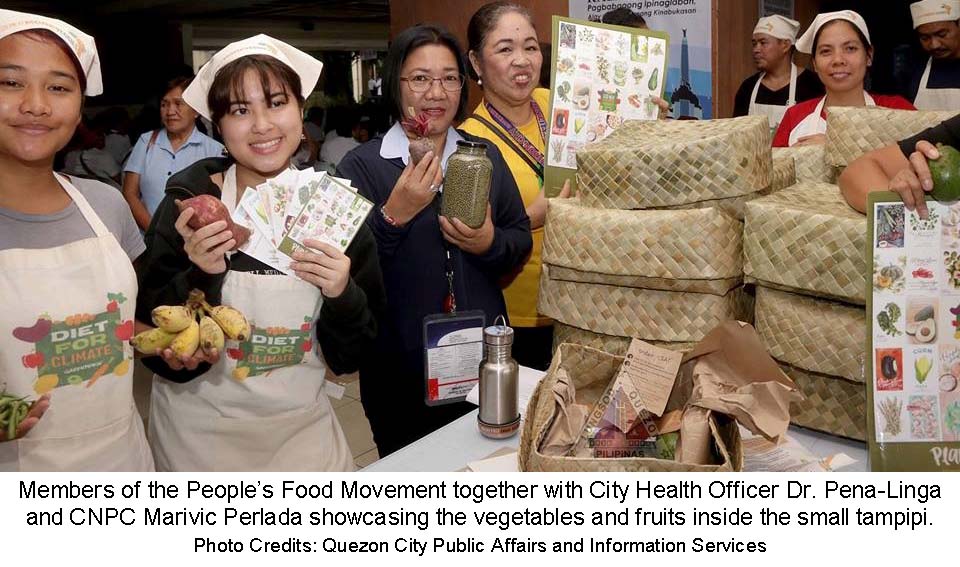
The People’s Food Movement led the symbolic distribution of small tampipis (native trunk or chest made of bamboo, rattan, or a certain kind of palm leaves), containing leafy and hearty vegetables and seasonal fruit, to the department heads of the Quezon City Government during the launching event. Also included in the tampipi were “Veggie-a-Week” posters and post cards with recipe cards crafted by Ms. Alessa Lanot of LifeAfterBreakfast.PH and Pipino PH together with the Filipina Watercolor Artists.
Dr. Rolando “Oyie” Balburias, a Functional Medicine and Health Optimization Practitioner, discussed how investment on the foods we eat are also an investment for our health. Similar to delaying financial investment until late in life will negatively impact on your net wealth. Thus, great investment in your lifestyle and food choices gives you the key to longevity and vitality.
The demand of meat production due to preference of eating meat products is slowly taking away more from nature than we are capable of giving back. It might seem impossible to turn things around but the first step will always be the most crucial. With every action taken by all, we have the power to break the cycle of overconsumption. Together, for a healthier lifestyle and environment, we can do MORE by consuming LESS. (TAR/NPC MEVF/NNC-NCR)
Written by: Ms. Jirah Asa M. Sideco, Nutritionist-Dietitian II, Quezon City
Ms. Sideco is a member of the Regional Nutrition Writers’ Guild and C/DNPC of Metro Manila Association, Inc.