


 This pandemic taught us a lot about life, making us rethink if everything will be better in the future. It changes the lifestyle that we are comfortable living in and the convenience we love that makes life much easier. But this pandemic calls our attention to practicing a healthy lifestyle including the right diet to protect and boost the immune system in fighting COVID-19.
For years, different healthy diets were established but disregarded due to busy work and/or school schedules that turned us to patronize convenient foods but little did we know the long-term bad effect of this diet to our health. For once, pause for a while… reflect…and ask yourself, “How well do I know my diet? Does my current dietary practice put me in danger?” If you can assess your diet, do it now. Do not wait for our dietary practice to go after us especially in these trying times. This persisting health crisis may have caused us a lot of frustrations. However, this pandemic which restricted our movements and shutted down most of the food establishments taught us to become more responsible, early preparation of the necessities for the future and had given us more time to think on healthy options of preparing meals in our respective homes. One of the many available diets we can practice is the caveman diet or commonly known as the “Paleo diet”.
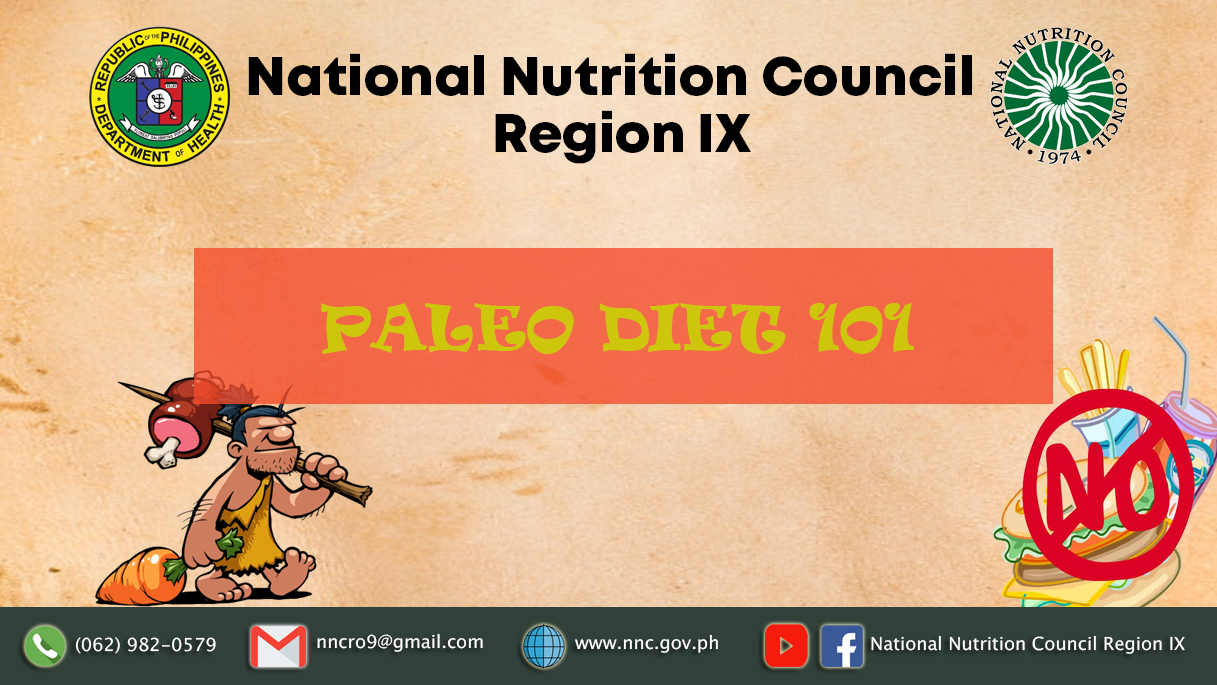
Paleo diet is very relevant today due to restrictions brought by this pandemic. It is best to practice a paleo diet which brings us back to 10,000 years ago where our ancestors hunted for food. The diet considers most of the food found in the wild such as lean meats, fishes, fruits, vegetables, nuts and seeds. The diets also consider the source of the meat carcasses if they were fed with weeds or from fresh vegetables. According to the Mayo Clinic, we need to avoid grains, legumes, dairy products, refined sugar, and processed foods in general because these food items are not found during the stone age and these foods contribute to developing illnesses/ diseases.
Paleo diet is good to practice in times of pandemic as this can save us from spending a lot of money and can protect us from acquiring the virus in going out to look for ingredients for our meals. However, hunting for food literally in your neighborhood is not realistic in this civilized period especially if these plants and animals were not yours and were planted and domesticated by others. The best action is to establish your own food production in your own backyard by planting fruit trees and vegetables, and raising small animals like chicken, pigs and goats. This pandemic may soon cease to persist but our need for food to survive continues. Thus, home food production must be made a habit. Most importantly, growing or producing your own food assures you of its safety unlike those bought outside which may be treated with toxic preservatives and other chemicals to prolong their shelf life. Fresh produce from our gardens not only provides us good nutrition but gardening itself also loosen us up from stress which may help improve our immune system. The bottomline of everything is to follow the needed caloric intake and the observance of the proper dietary recommendations. Go for what is healthy. Be wise and practical but always seek advice from a doctor or nutrition expert before starting whenever you are unsure of a certain dietary regimen new to you.
NO II Joanna Marie E. Baltazar
References:
- “Nutrition and healthy eating”
https://www.mayoclinic.org/healthy-lifestyle/nutrition-and-healthy-eating/in-depth/paleo-diet/art-20111182
- “The ultimate guide to the caveman diet”
https://ultimatepaleoguide.com/caveman-diet/
- “8 lessons the COVID-19 pandemic has taught us”
https://www.aoa.org/news/practice-management/perfect-your-practice/8-lessons-the-covid-19-pandemic-has-taught-us?sso=y
- “The best diet: Quality counts”
https://www.hsph.harvard.edu/nutritionsource/healthy-weight/best-diet-quality-counts/
- “Paleo diet meal plan: A simple guide”