


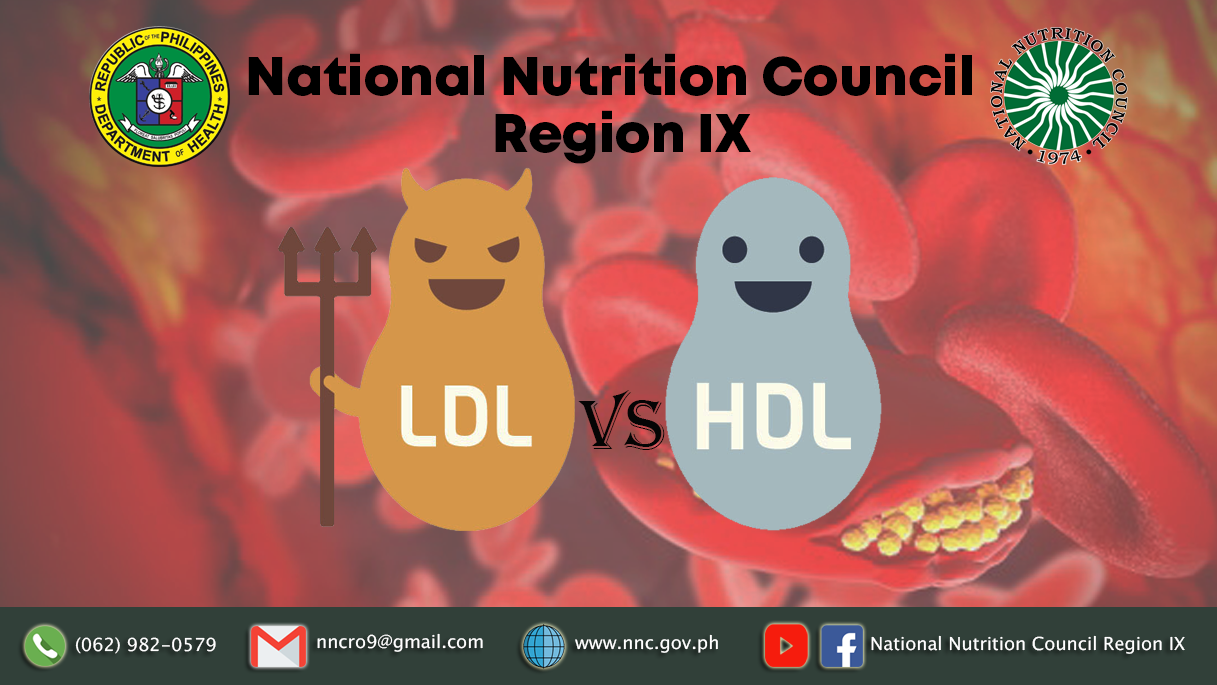
 We often hear negative comments about cholesterol…that all cholesterol should be avoided because it increases the risk for cardiovascular diseases and other metabolic conditions as well. But how well do we know our cholesterol? Is cholesterol really bad for our health? What are the food sources of cholesterol? These are the questions that are worthy of answers.
According to the Centers for Disease Control and Prevention (CDC), cholesterol travels through the blood on proteins called a lipoprotein. There are two types of cholesterol present in our body–the LDL and HDL. LDL (low-density lipoprotein) is commonly known as the “bad” cholesterol, and HDL (high-density lipoprotein) is the “good” cholesterol. I recalled back in my college years that these two cholesterol levels are easy to remember by just thinking about “L” as Lucifer which is bad and “H” as Heaven which is good. Though these two have their significance to our health, their levels must always be in check to keep our body healthy. Generally, LDL contributes to fatty build-ups in arteries or what we called atherosclerosis which narrows the arteries increasing the pressure that leads to heart attack and stroke. On the other hand, our friendly HDL protects us against heart attack and stroke by carrying LDL cholesterol away from the arteries and back to the liver where it is broken down and passed from the body. To be able to control or prevent the increase of bad cholesterol build-up in our body, we need to know the list of foods that are high in HDL and low in LDL.
In years, food innovation and modification have been significantly changing and are continuously evolving. How sure we are about the food we eat is safe for our health? The mayoclinic.com provides a list of foods that are high in “good cholesterol” such as oatmeals and high fiber foods, fishes and omega-3 fatty acids, almonds and other nuts, avocado, and whey protein are good sources of good cholesterol. Meanwhile, fried foods and fast foods are not recommended, including processed meats and desserts. It was noted that increased risk of plaques and build-ups of cholesterol in our body due to “bad cholesterol” is usually brought about by high consumption of foods with processed fats known as hydrogenated fat or foods products from continuous reheating of oil. Though, an individual lifestyle and genetic composition can also contribute to the body to produce too much cholesterol, moderation is always the key. Aim to eat less on a diet that has high levels of bad cholesterol and eat with self-control on foods with high levels of good cholesterol. Remember, fat intake affects balance because fatty acids bind to the liver and regulate the production of cholesterol. Thus, pay attention not only to the quantities of fat in the diet but also the quality of fat you consume.
NO II Joanna Marie E. Baltazar
References:
- HDL (Good), LDL (Bad) Cholesterol and Triglycerides
https://www.heart.org/en/health-topics/cholesterol/hdl-good-ldl-bad-cholesterol-and-triglycerides
- LDL and HDL Cholesterol: “Bad” and “Good” Cholesterol
https://www.cdc.gov/cholesterol/ldl_hdl.htm
- Cholesterol: Top foods to improve your numbers
https://www.mayoclinic.org/diseases-conditions/high-blood-cholesterol/in-depth/cholesterol/art-20045192
- 11 High-Cholesterol Foods- Which to Eat, which to Avoid