


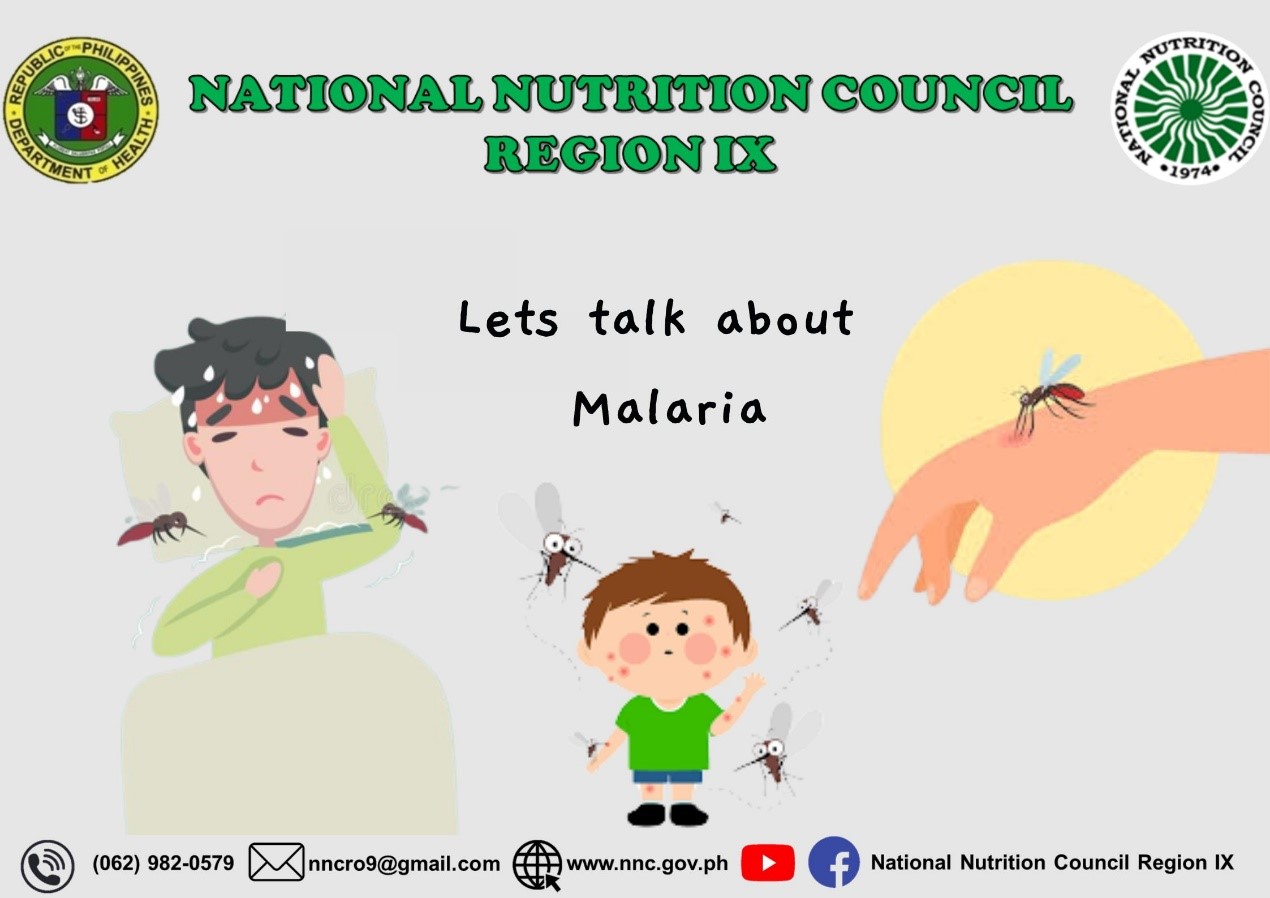
 Did you know that malaria, a life-threatening disease caused by parasites that are transmitted to humans through the bite of an infected mosquito, was once one of the leading causes of death in the Philippines? Per Proclamation No. 1168 the month of November of every year is declared as Malaria Awareness Month. In observance of Malaria Awareness Month, let us be aware and learn the details about this disease. Malaria is an acute fever illness caused by Plasmodium parasites, which people catch through the bites of infected female Anopheles mosquitoes. Of the five parasite species that cause malaria in humans, P. falciparum and P. vivax are the two most hazardous. P. falciparum is the most prevalent and dangerous malaria parasite on the continent of Africa. P. vivax is the most prevalent malaria parasite outside of sub-Saharan Africa.
Malaria’s earliest symptoms, such as fever, headache, and chills, might be mild and difficult to identify. Ten to fifteen days after the infected insect bite, they normally manifest. Without treatment, P. falciparum malaria can progress to severe illness and death in less than 24 hours.
International health initiatives distribute malaria prevention medications and bed nets sprayed with insecticides to keep people safe from mosquito bites. The World Health Organization advises using a malaria vaccination for children who live in countries with a high prevalence of malaria cases.
With the aid of protective clothing, bed nets, and insecticides, you may stay safe when traveling. You can also take prophylactic medicine before, during, and after visiting a high-risk area. Widespread resistance to malaria parasites has been developed as a result of common drugs used to treat the condition.
Malaria symptoms and signs can include:
- Fever
- Chills
- General uneasy sensation
- Headache
- Nausea and diarrhea
- Diarrhea
- Continent pain
- Joint or muscle aches
- Fatigue
- Fast breathing
- Fast heartbeat
- Cough
Fever and chills are among the symptoms, which may go away after a few days but may return weeks or months later. Malaria eventually has an impact on important body organs.
If you get a fever while residing in or shortly after leaving a place with a high risk of malaria, consult your physician. Seek immediate medical assistance if you are experiencing serious symptoms.
PDO I Kimberly M. Tanador, RND
References:
Malaria
https://www.mayoclinic.org/diseases-conditions/malaria/symptoms-causes/syc-20351184
https://www.webmd.com/a-to-z-guides/malaria-symptoms
WHO – Malaria
https://www.who.int/en/news-room/fact-sheets/detail/malaria