


Cup feeding is an alternative method by using a small and wide-mouthed cup to feed a baby who cannot latch directly to breast and needs to be provided with breast milk. Infants that are premature, weak, or sick and cannot directly latch to take all the milk from the breast, need to be cup-fed to continuously receive their nutrient needs from breast milk for their growth and development without being directly attached to the mother’s breast. This method can also be helpful when breastfeeding is not yet well established and when the mother is unable to feed her baby due to breast problems such as soreness of nipples. By using this method, the father and other members of the family will also have a chance to help feed the baby especially when the mother is not around.
World Health Organization recommends and encourages the use of cup feeding as a better method than using bottle and teats in feeding the infants. Artificial teat, like feeding bottles, may cause “nipple confusion” that may jeopardize the baby’s breastfeeding practice. This method prevents “nipple confusion” since it maintains the infant’s latch-on and usual breastfeeding practice.
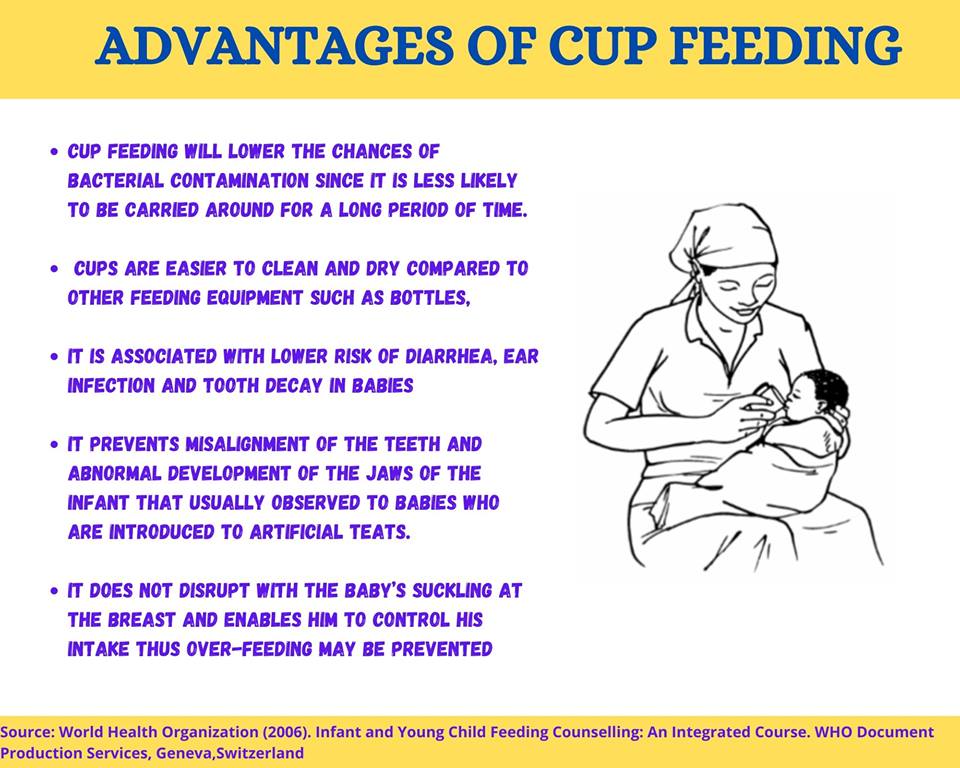
There are many advantages in cup feeding that would benefit and protect the health of the baby. Cup feeding will lower the chances of bacterial contamination since it is less likely to be carried around for a long period of time. Also, compared to other feeding equipment such as bottles, cups are easier to clean and dry. This feeding method is also associated with lower risk of diarrhea, ear infection and tooth decay in babies. It prevents misalignment of the teeth and abnormal development of the jaws of the infant that usually observed to babies who are introduced to artificial teats. Most importantly, it does not disrupt with the baby’s suckling at the breast and enables him to control his intake thus over-feeding may be prevented.
So, how will you feed a baby by a cup?
Before feeding the baby, first, the mother/caregiver should prepare the sterilized/cleaned cup to be used in feeding. It is important that the cup have a wide mouth so that the caregiver can observe the milk flow and movement of the baby’s mouth and nose. Second, thoroughly wash your hands to prevent cross contamination of microorganism. Third, carefully hold the baby sitting upright or semi-upright on the lap of the caregiver and make sure that the baby is properly swaddled to keep his hands from getting in the way and spilling the cup.
Fourth, pour the estimated amount of milk for one feed into the cup. Fifth, carefully place the small cup of milk near to the baby’s lips and tip the cup so that the milk just reaches the baby’s lips. The mother should remember that cup should be lightly rested on the lower lip of the baby and the outer part of the baby’s upper lip should touch the edges of the cup. During the process of cup feeding the baby becomes alert and opens his mouth and eyes. A low-birthweight baby using his tongue when he starts to take the milk whereas older babies such the milk which may spill some of the milk.
It is important to remember that during cup feeding, the milk should not be poured directly to the baby’s mouth. Just keep the cup touching the baby’s lips and let him take the milk. When he is satisfied on his milk intake, the baby closes his mouth and will not take more of it. Excess amount of the estimated breast milk can be given to his next feed. He may take more next time, or he can be fed more often to assure that he consumes enough breast milk. Amount of his milk intake over 24 hours should be recorded and measure so that the caregiver will know how often and how much she/he can give every feed to meet his needs for his growth and development. #FVV
Sources:
National Nutrition Council (2018). Idol ko si Nanay- A Facilitator’s guide. Taguig City, Philippines
World Health Organization (2006). Infant and Young Child Feeding Counselling: An Integrated Course. WHO Document Production Services, Geneva, Switzerland
Herrera, A. (2015). 7 Good reasons to Cup-feed your baby. Retrieved from: https://www.smartparenting.com.ph/pregnancy/breastfeeding/7-reasons-to-cup-feed-your-baby