


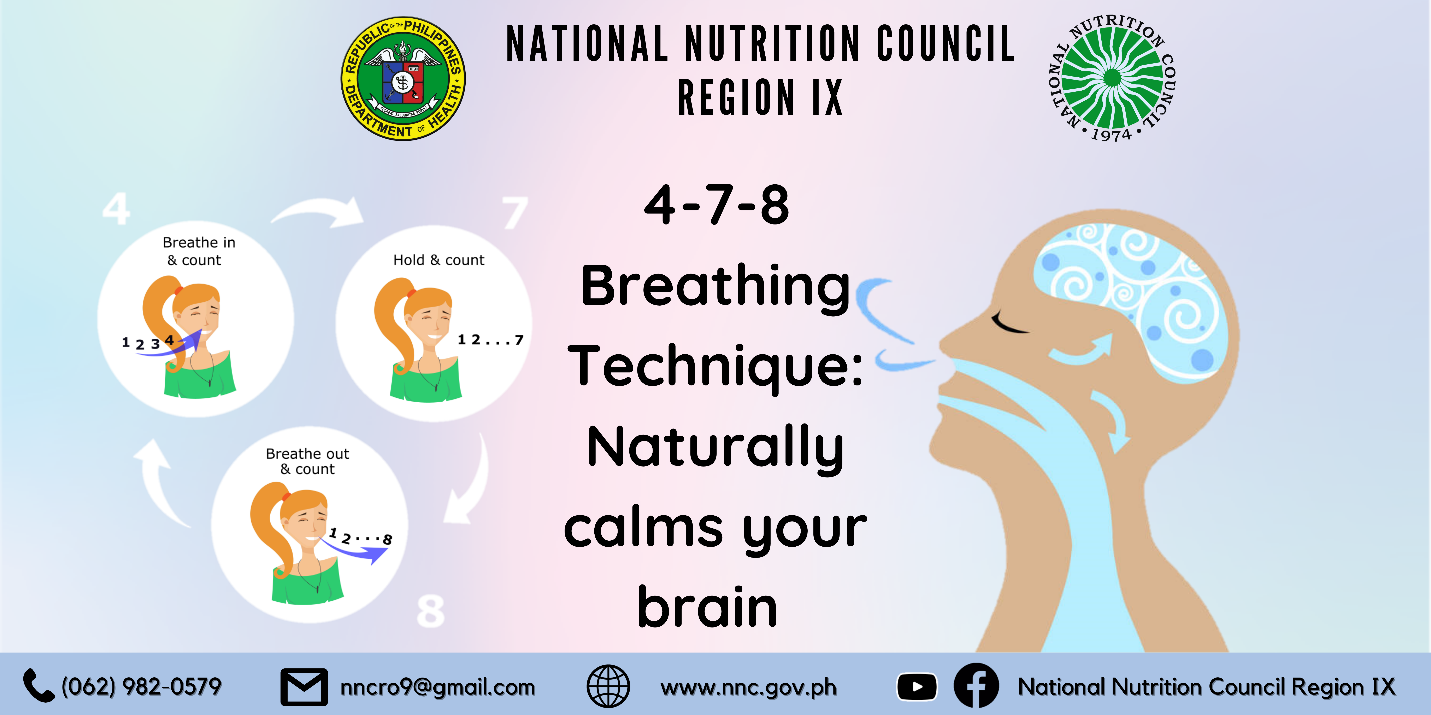
 Do you have difficulty sleeping at night? Try this 4-7-8 breathing technique. It naturally calms your nervous system which can help you fall asleep easier in a short period of time. The 4-7-8 breathing technique is a breathing pattern was developed by a world-renowned leader and pioneer in the field of integrative medicine Dr. Andrew Weil. It is based on an ancient yogic technique called “Pranayama”, which helps practitioners gain control over their breathing. Breathing techniques are designed to bring the body into a state of deep relaxation. Specific patterns involve holding the breath for a period of time allow your body to replenish its oxygen. From the lungs outward, techniques like 4-7-8 can give your organs and tissues a much-needed oxygen boost. Relaxation practices also help bring the body back into balance and regulate the fight-or-flight response we feel when we’re stressed. This is particularly helpful if you’re experiencing sleeplessness due to anxiety or worries about what happened today — or what might happen tomorrow. Swirling thoughts and concerns can keep us from being able to rest well. The 4-7-8 technique forces the mind and body to focus on regulating the breath, rather than replaying your worries when you lie down at night. Proponents claim it can soothe a racing heart or calm frazzled nerves. Dr. Weil has even described it as a “natural tranquilizer for the nervous system.”
How to do it? To practice 4-7-8 breathing, find a place to sit or lie down comfortably. Be sure you practice good posture, especially when starting out. If you’re using the technique to fall asleep, lying down is best. Prepare for the practice by resting the tip of your tongue against the roof of your mouth, right behind your top front teeth. You’ll need to keep your tongue in place throughout the practice. It takes practice to keep from moving your tongue when you exhale. Exhaling during 4-7-8 breathing can be easier for some people when they purse their lips.
The following steps should all be carried out in the cycle of one breath:
- First, let your lips part. Make a whooshing sound,
- exhaling completely through your mouth.
- Next, close your lips, inhaling silently through your
- nose as you count to four in your head.
- Then, for seven seconds, hold your breath.
- Make another whooshing exhale from your mouth for eight seconds.
When you inhale again, you initiate a new cycle of breath. Practice this pattern for four full breaths. The held breath (for seven seconds) is the most critical part of this practice. It’s also recommended that you only practice 4-7-8 breathing for four breaths when you’re first starting out. You can gradually work your way up to eight full breaths. This breathing technique shouldn’t be practiced in a setting where you’re not prepared to fully relax. While it doesn’t necessarily have to be used for falling asleep, it can still put the practitioner into a state of deep relaxation. Make sure you don’t need to be fully alert immediately after practicing your breathing cycles.
There is some evidence to suggest that deep breathing techniques have a positive impact on a person’s anxiety and stress levels. For example, a 2011 review article in Health Science Journal identifies some of the potential health benefits of deep breathing techniques, particularly for deep breathing from the diaphragm. These possible benefits include:
- decreased fatigue
- reduced anxiety
- reduced symptoms of asthma in children and adolescents
- better stress management
- reduced hypertension
- reduced aggressive behavior in adolescent males
- improved migraine symptoms
According to the 2011 review article in Health Science Journal, studies shows that 6 weeks of practicing pranayamic breathing, or breathing that focuses on controlling breath movement, may have a positive effect on a person’s heart rate variability, which correlates with stress, and also improve cognition and anxiety.
Breath in…Breath Out and try to practice the 4-7-8 breathing technique. It will not only make your nervous system calm and make you fall asleep fast but also help you have healthy lungs.
- – NO I Zamubec Alomar C. Adlawan
References:
1. What Is the 4-7-8 Breathing Technique?
https://www.healthline.com/health/4-7-8-breathing#How-to-do-it-
2. How it works and benefits
https://www.medicalnewstoday.com/articles/324417#benefits