


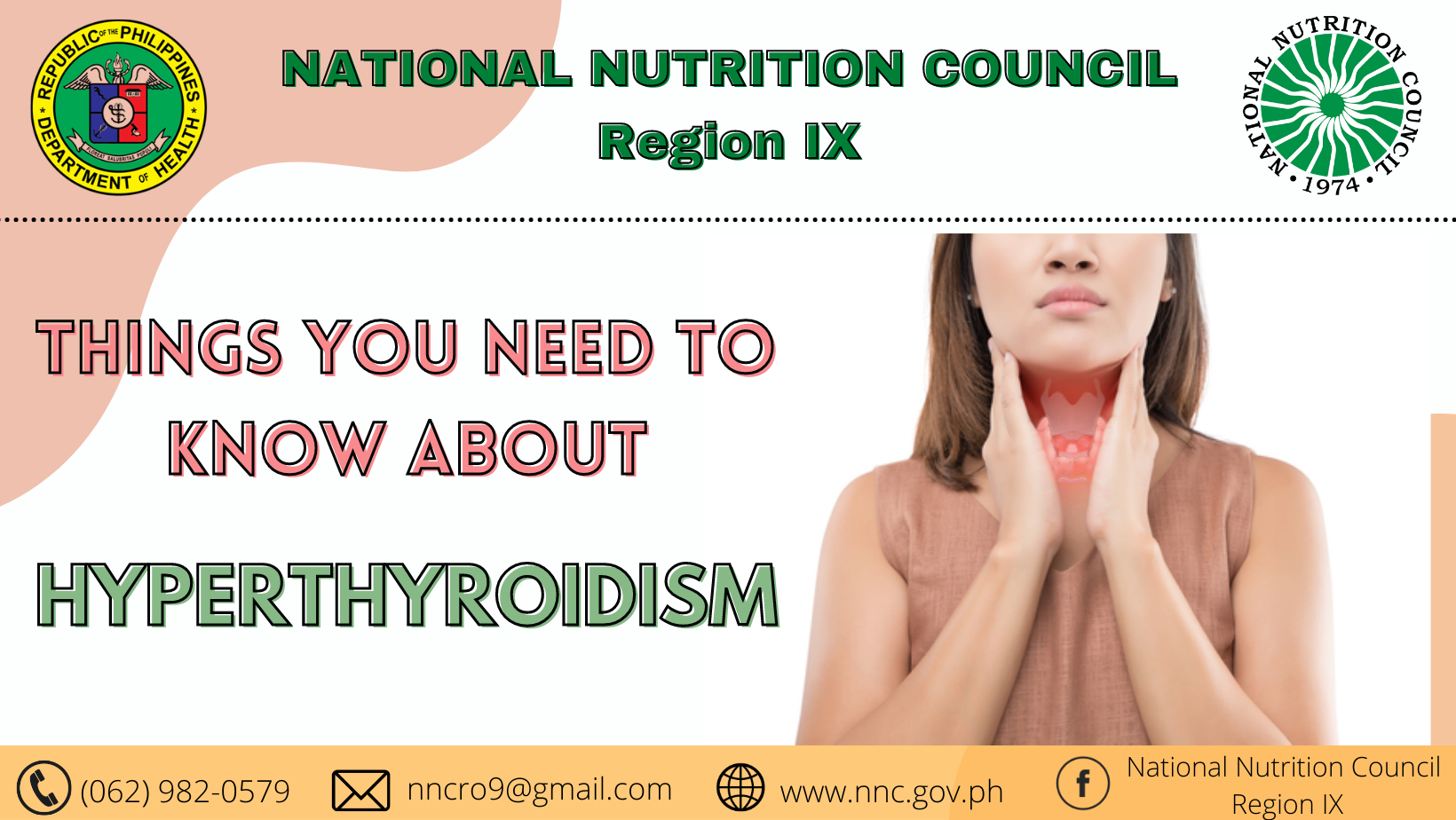
 Hyperthyroidism, also called overactive thyroid, is when the thyroid gland makes more thyroid hormones than your body needs. The thyroid is a small, butterfly-shaped gland in the front of your neck. Thyroid hormones control the way the body uses energy, so they affect nearly every organ in your body, even the way your heart beats. If left untreated, hyperthyroidism can cause serious problems with the heart, bones, muscles, menstrual cycle, and fertility. During pregnancy, untreated hyperthyroidism can lead to health problems for the mother and baby.
According to the 2012 Philippine Thyroid Diseases Study (PhilTiDes-1), the prevalence of thyroid function abnormalities in the Philippines is 8.53% among the adult population, and among the thyroid disorders, goiter is most common with a prevalence rate of 10.12%. Meanwhile, the 2013 National Nutrition Survey revealed that about 5.8 million Filipinos were afflicted with thyroid disorders in different clinical presentations. These manifest as goiter, thyroid malignancy, mental deficiency, physical deformities, congenital hypothyroidism, cretinism, and reproductive failure. If untreated, these disorders could lead to the detrimental reduction of intellectual and physical capacity and even death among susceptible individuals.
How common is hyperthyroidism? A survey conducted by the National Institute of Diabetes and Digestive and Kidney Diseases showed that about 1.2 percent of people in the United States have hyperthyroidism. That’s a little more than 1 person out of 100.
The survey also shows that women are 2 to 10 times more likely than men to develop hyperthyroidism. You are more likely to have hyperthyroidism if you have a family history of thyroid disease, have other health problems, including pernicious anemia (a condition caused by a vitamin B12 deficiency), type 1 diabetes, primary adrenal insufficiency, if you consume large amounts of food containing iodine, or use medicines that contain iodine.
Age and pregnancy are also contributing factors for hyperthyroidism. During pregnancy, severe hyperthyroidism that isn’t treated can affect both the mother and the baby. It is advisable that if a woman has hyperthyroidism, it must be under control before becoming pregnant.
Symptoms of hyperthyroidism can vary from person to person and may include goiter, nervousness or irritability, fatigue or muscle weakness, trouble tolerating heat, trouble sleeping, shaky hands, rapid and irregular heartbeat, frequent bowel movements or diarrhea and weight loss.
Hyperthyroidism has several causes including too much intake of foods or medications rich in Iodine. Your thyroid uses iodine to make thyroid hormone. The amount of iodine you consume affects the amount of thyroid hormone your thyroid makes. In some people, consuming large amounts of iodine may cause the thyroid to make too much thyroid hormone. Some medicines and cough syrups may contain a lot of iodine. One example is the heart medicine amiodarone. Seaweed and seaweed-based supplements also contain a lot of iodine. To avoid too much consumption, we must follow the FAO/WHO recommendation for iodine. For adults both male and female, the amount recommended is only 150 micrograms and 200 micrograms for pregnant and lactating women.
Hyperthyroidism can be treated. The aim of the treatment is to bring thyroid hormone levels back to normal to prevent long-term health problems and to relieve uncomfortable symptoms. However, no single treatment works for everyone. Treatment depends on the cause of your hyperthyroidism and how severe it is. When recommending a treatment, your doctor will consider your age, possible allergies to or side effects of the medicines, other conditions such as pregnancy or heart disease.
The Department of Health encourages Filipinos to use iodized salts in their meals and to eat food rich in iodine such as dairy products, seafood (shellfish and seaweeds), meats, bread and eggs, but in moderation. Special attention should be provided to pregnant women because iodine deficiency during this critical period can cause premature birth, miscarriage or delivery of a baby with low intellect. The Department of Health also encourages pregnant women on their first and second trimester to take at least 2 iodized oil capsules to prevent both Iodine deficiency and hyperthyroidism.
PNC-ZDS Marie Claire A. Gaas
References:
1. What is hyperthyroidism?
National Institute of Diabetes and Digestive and Kidney Diseases
https://www.niddk.nih.gov/health-information/endocrine-diseases/hyperthyroidism
2. Prevalence of Thyroid Disorders Among Adults in the Philippines
3. FAO/WHO recommendation for iodine