


 25 January 2019, Cagayan de Oro City – To achieve and maintain your weight loss goal, it is important to find a healthy way of eating that you enjoy and can follow for life. Eating less of what you consumed was never an option in losing weight. Instead, planning out the best method to grasp rather than cutting out is considered superior strategy to make.
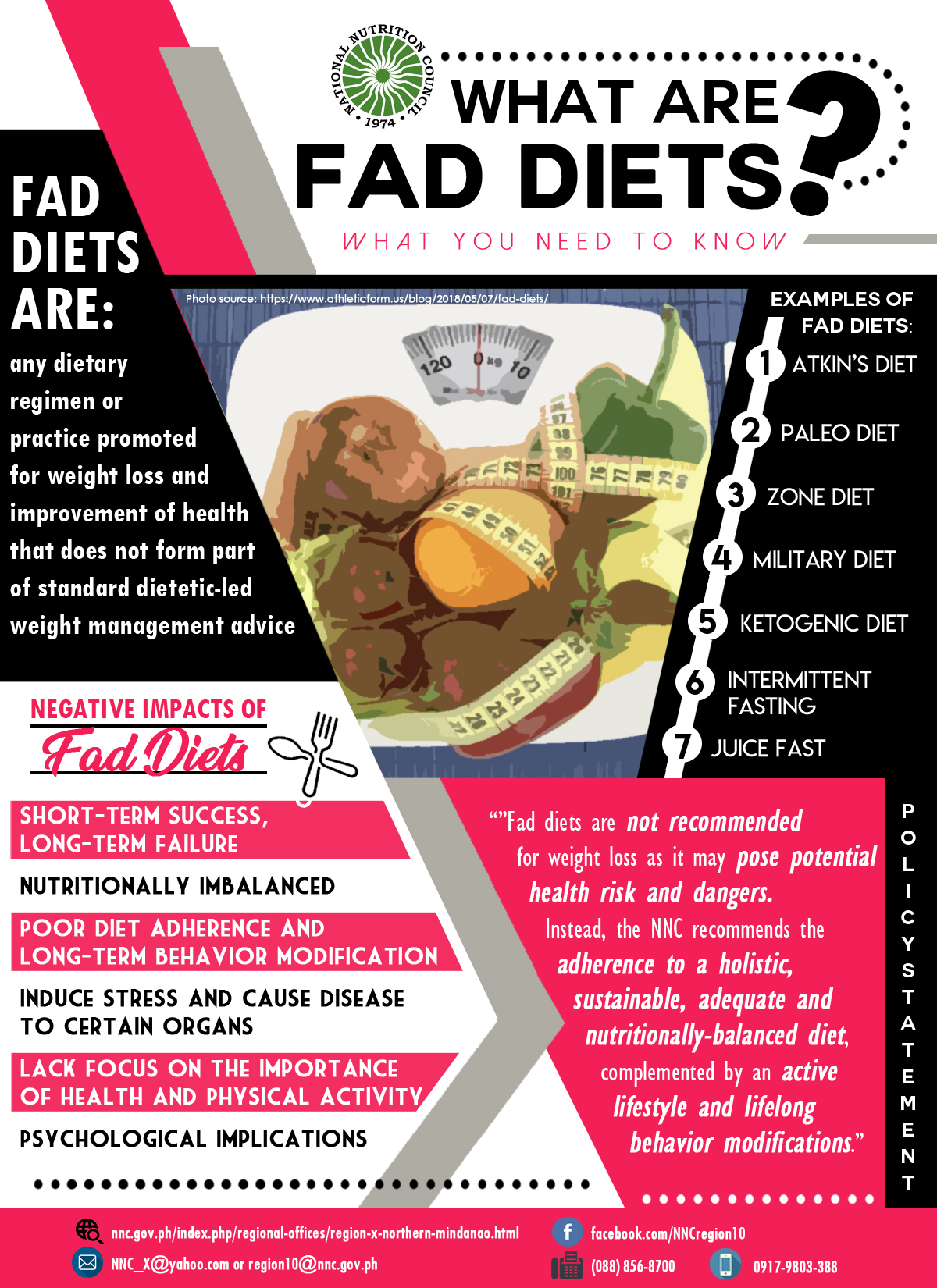
Fad diet, also called as a crash diet or diet sculpt, is any dietary regimen or practice promoted for weight loss and improvement of health that does not form part of standard dietetic-led weight management advice (Hankey, 2018). Theoretically said to be the fastest solution in losing weight drastically in a very short period of time, fad diets comprise of meals very restricted in providing energy for body functioning. This practice was introduced almost 200 years ago, pioneered and made popular by Lord Byron with his Vinegar and Water Diet. In the following years, similar fad diets surfaced and were then being used. Some of the popular fad diets are the Very Low Energy Diet (VLED), ketogenic diet, intermittent fasting, water fasting and juice fasting.
Losing weight is now categorized as a social issue. Those who attempt to lose weight to establish “body image” tend to do it in the most convenient and fastest way, thus resorting to fad diets without considering its adverse effects in the long run. Fad diets are made even more popular among the crowd due to the based anecdotal evidence and/or testimonials rather than robust clinical trials or from complex studies. All have one thing in common: a temporary solution to what for many people may impose a lifelong problem.
Consequently, there are supports claiming the positive effects of fad diets, quite promising because of its influence in prevention of some fatal diseases. Most of the studies on fad diets confirm that nutrient deficiencies and imbalance, malnutrition and long-term behavioral change can happen upon indulging in fad diets. Moreover, fad diets can induce eating disorders, stress and may cause disease to certain organs, or in worst cases, death.
Instead of resorting to omission of calorie-dense foods in the process of losing weight, the rule of thumb for proper nutrition is to always consume foods in moderation, variety and balance. Moderation refers to eating the right proportions of food, that is, not consuming too much or too little as compared with what the body needs; variety means eating different kinds of food from the different food groups every day and balance refers to consuming foods from different food groups in proportion to each other. Emphasis should be made on vegetables, fruits, lean meats, root crops, whole grains, poultry, fish, eggs, beans, nuts and fat-free or low fat milk.
Activate creativity by experimenting different flavors, colors, and healthy recipes so that you can evaluate yourself on the food you like and dislike. Seek out healthy alternatives to your favorite foods. And most importantly, go at your own pace. Oftentimes, self-imposed strict timelines create quick results but not lasting. Execute changes at a pace that works best for you, and always find your own way to stay on track.
Most importantly, good nutrition should be coupled with adequate physical activity at least 30 minutes per day. Losing one to two (1-2) pounds per week is the general recommendation for safe and sustainable weight loss.
Healthy way of losing weight is a process which cannot be achieve overnight. In totality, the best recommendation to lose weight is combination of consumption of safe, healthy and holistic diet, physical activity, and behavioral modifications — these are the keys to long-term weight loss and improvement of overall health. Moreover, it is a long journey for all health and nutrition professionals to maintain a working knowledge of these current fad diet trends for correct and updated information to be disseminated.
As a general rule, weight loss requires an individualized and interdisciplinary approach. Be informed! Keep informed! (Gwyn Yagong Balaba, CMU BSND OJT)