


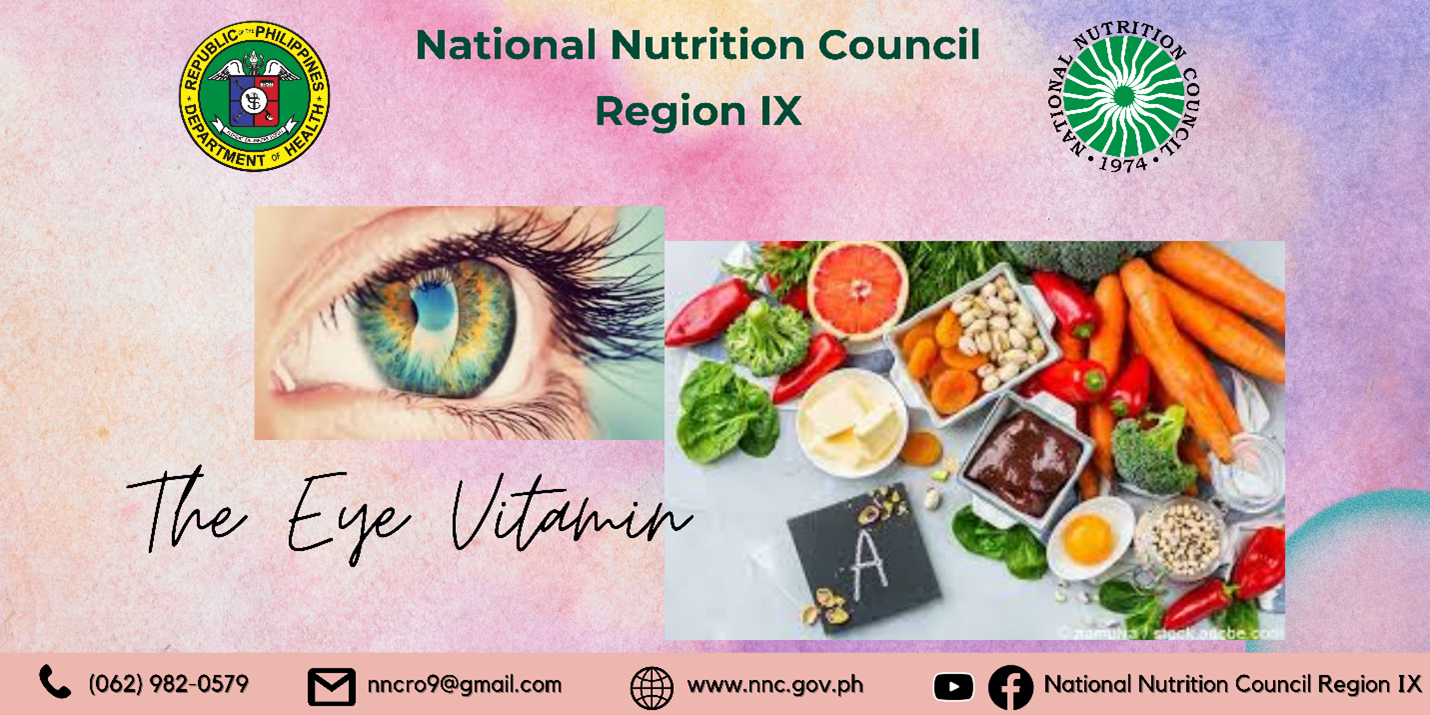
 Did you ever wonder why you were forced to eat Kalabasa (squash) by your mother every time she cooked a squash dish, and she insisted that it is good for your eyes? Well, mothers really know best because squash is good for the eyes as it contains Vitamin A.
Vitamin A, also known as retinol, is a fat-soluble vitamin that can be found in many fruits and other food sources rich in Carotenoids, a group of yellow or orange chemicals found in plants that will be converted to vitamin A in the body. It has several important functions. These include helping your body’s natural defense against illness and infection (the immune system) work properly, helping vision in dim light, keeping skin and the lining of some parts of the body, such as the nose. Vitamin A is essential for many physiological processes and supports many systems in the body which include maintaining the integrity and function of all surface tissues (epithelia) like for example, the skin, the lining of the respiratory tract, the gut, the bladder, the inner ear and the eye. Vitamin A also supports the daily replacement of skin cells and ensures that tissues such as the conjunctiva are able to produce mucous and provide a barrier to infection. For these, it is essential for vision under conditions of poor lighting, for maintaining a healthy immune system, for growth and development and for reproduction.
Meanwhile, a lack of Vitamin A is referred to as vitamin A deficiency disorder. Vitamin A deficiency is the leading cause of preventable blindness in children and increases the risk of disease and death from severe infections such as diarrheal disease and measles. Vitamin A deficiency may also occur in women during the last trimester of pregnancy in high-risk areas. Breastfeeding is the best way to protect babies from vitamin A deficiency and, in areas where vitamin A deficiency is a public health problem, vitamin A supplementation is recommended in infants and children 6-59 months of age.
Good sources of vitamin A (retinol) include cheese, eggs, oily fish fortified low-fat spreads, milk and yogurt, liver and liver products such as liver pâté – this is a particularly rich source of vitamin A, so you may be at risk of having too much vitamin A if you have it more than once a week (if you’re pregnant you should avoid eating liver or liver products). You can also get vitamin A by including good sources of beta-carotene in your diet, as the body can convert this into retinol. The main food sources of beta-carotene are yellow, red and green (leafy) vegetables, such as spinach, carrots, sweet potatoes and red peppers, yellow fruit, such as mango, papaya and apricots.
People also use vitamin A to reduce complications of diseases such as malaria, HIV/AIDS, and measles, and for fertility, diarrhea, vision, child development, skin disorders, infections, and many other conditions, but there is no good scientific evidence to support most of these uses. The total vitamin A content of a food is usually expressed as micrograms (µg) of retinol equivalents (RE). The amount of vitamin A adults aged 19 to 64 need is:700 µg a day for men,600 µg a day for women. You should be able to get all the vitamin A you need from your diet. Any vitamin A your body does not need immediately is stored for future use. This means that your daily consumption of natural sources in adequate amount is enough and there is no need for you to take daily supplementation. Thus, brighten up your eyesight and boost your immunity by including in your diet good natural sources of vitamin A.
NO I Zamubec Alomar C. Adlawan
References:
- Vitamin A
https://www.webmd.com/vitamins/ai/ingredientmono-964/vitamin-a
- What is vitamin A and why do we need it?
https://www.ncbi.nlm.nih.gov/pmc/articles/PMC3936685/
- Important Functions of Vitamin A
Vitamins and minerals – Vitamin A – NHS (www.nhs.uk) important functions
- Vitamin A beneficial for eyes
https://www.aoa.org/news/clinical-eye-care/health-and-wellness/vitamin-a-good-for-the-eyes?sso=y#:~:text=Vitamin%20A’s%20protective%20role%20in,t%20negate%20its%20overall%20benefits
- Vitamin A deficiency