


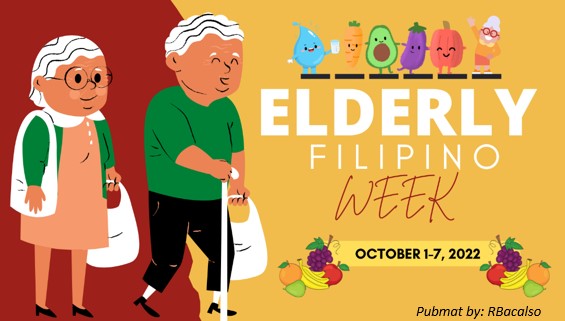
 To promote the seniors’ rights and honor their contributions to the development of the country, former president Fidel V. Ramos signed Proclamation No. 470 on September 26, 1994, declaring the first week of October from 1-7 as Linggo ng Katandaang Filipino or Elderly Filipino Week.
People with advancing age experienced aging, which is considered a natural phenomenon where the body decreases its physical functions, greater susceptibility to disease such as osteoporosis, heart disease, diabetes, cancer and Alzheimer’s disease and decreased viability (Barkoukis H., 2016). Republic Act 9994, also known as the Expanded Senior Citizens Act of 2010 defined senior citizens as elderly persons aged 60 years old and above.
In the Philippines, the elderly population has been growing significantly during the past decades. The increasing number of senior citizens are becoming more vulnerable for various reasons. Thus, the right to appropriate food, shelter, clothes, and medical care, livelihood opportunities, family and community support, and self-help is very essential.
The declaration of Elderly Filipino Week has given the various executive departments, mainly the Department of Social Welfare, an obligation to provide programs promoting the well-being of the Filipino elderly. Aside from support services and programs, senior citizens should be given the fundamental necessities of nutrition and health, especially as they are experiencing biological aging which slowly weakens the immune system.
In the recent Expanded National Nutrition Survey 2019 of DOST-FNRI for the elderly, it shows that the prevalence of chronic energy deficiency decreased from 17.2% to 13.4% but the prevalence of overweight and obesity increased from 21.3% to 24.7% and 4.8% to 6.3% respectively. Furthermore, elevated blood pressure significantly declined but high fasting blood sugar increased. Moreover, about 50% of them are physically inactive.
A healthy nutritional status is crucial for healthy aging. Early diagnosis of older persons at risk of inadequate caloric and nutrient sufficiency, referred to as nutritional risk, is critical to sustaining health, independence, quality of life, and longevity. So here are some practical tips for seniors to have healthy habits:
- Follow the pinggang pinoy for elderly. The pinggang pinoy for the elderly is depicted on a red plate, with the required proportions for each food group in each meal. The three food groups are Go (rice, bread, corn, potatoes, root crops), GROW (fish, chicken, lean meat, legumes, and so on), and GLOW (vegetables and fruits). This promotes good eating habits by adhering to the basic nutritional principles of moderation, balance, and variety.
- Reduce intake of salts, saturated fats, and sugar. This must be reduced because it contributes to the development of chronic diseases such as diabetes, cardiovascular disease, and cancer.
- Drink milk. Make sure the elderly person drinks at least one glass of milk per day. If milk is unavailable, use alternative milk products or calcium-rich foods such as dilis for strong bones and teeth and to prevent osteoporosis.
- Consume plenty of water. Water is one of the macronutrients that everyone’s body requires for proper hydration.
- Consume soft, easy-to-chew and swallow foods. Because the elderly have difficulty chewing and swallowing due to weak teeth, it is preferable to modify the food texture.
- Maintain physical activity for the elderly. Encourage the elderly person to exercise, such as walking, as this can help increase strength and flexibility. It is thought that older Filipinos are one of the important contributors to society who needs support and safety in order to live a fulfilled life. Staying active empowered can be achieved by nourishing the body with the proper nutrition and by keeping a healthy lifestyle. RBacalso/NASLabordo
References:
Barkoukis, H. (2016). Nutrition Recommendations in Elderly and Aging. Medical Clinics of North America, 100(6), 1237–1250. doi:10.1016/j.mcna.2016.06.006
Department of Science and Technology – Food and Nutrition Research Institute (DOST – FNRI). 2019 Expanded National Nutrition Survey Results. http://enutrition.fnri.dost.gov.ph/
Department of Science and Technology – Food and Nutrition Research Institute (DOST – FNRI. Pinggang Pinoy for Elderly. fnri.dost.gov.ph/images/sources/PP-Older.pdf
National Council on Aging (2021). Healthy Eating Tips for seniors. https://www.ncoa.org/article/healthy-eating-tips-for-seniors
Official Gazette of the Philippines (February 15, 2010). Expanded Senior Citizens Act of 2010. https://www.officialgazette.gov.ph/2010/02/15/republic-act-no-9994/
Official Gazette of the Philippines (September 26, 1994). Elderly Filipino Week. https://www.officialgazette.gov.ph/1994/09/26/proclamation-no-470-s-1994/
Shock, N. (n.d). Human Aging. Britannica. https://www.britannica.com/science/human-aging