


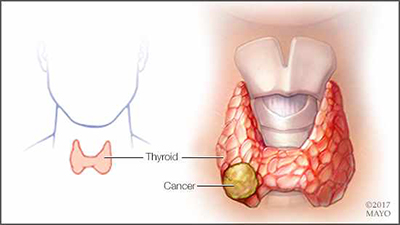
Thyroid cancer is a malignant tumor of the thyroid gland which is located around your throat area. It is more common in women aged 30 – 50 years old. The people who are at risk of having this condition are those with history of childhood exposure to high energy radiation to the head and neck from X-rays and other sources and those with family history of Thyroid cancer. Symptoms include:
• A firm to hard and painless lump on the neck
• Hoarseness
• Shortness of breath
• Difficulty swallowing due to an obstructing lump around the throat
• Enlarged lymph nodes
If you are experiencing many of the symptoms mentioned above, consult your doctor for proper assessment, diagnosis and treatment. Detection of the cancer at its early stage and the type of thyroid cancer will determine the health outcomes. In general, the treatment for thyroid cancer is through surgery or thyroidectomy which involves the removal of the tumor and affected tissues around the neck and through medications. The nutritional complications and management of surgery that involves the head and neck in the case of Thyroid cancer are:
1. Difficulty in chewing or swallowing
• Eat soft foods that are sliced into smaller pieces
2. Altered taste and smell
• Practice good oral hygiene such as rinsing mouth frequently and keeping mouth clean
• Use marinades and spices to mask altered tastes
• Use plastic utensils if metallic taste is the problem
• Eat cooler foods rather than warmer foods
• Flavor water with lemon or other fruit or herbs
• Choose non meat protein sources such as tofu, dairy or beans
3. Dry mouth
• Sip liquids throughout the day to keep the oral cavity moist
• Eat soft, moist foods with extra sauces, dressing or gravies
• Avoid alcoholic beverages and alcohol containing mouthwash because they may dr the mouth
4. Difficulty speaking
• Consult a speech therapist
In terms of lifestyle changes, it is important to stop smoking, excessive alcohol intake and illicit drug use to prevent cancer recurrence and to support recovery. If you are experiencing other problems such as lack of appetite and rapid weight loss after surgery, you may consult a Registered Nutritionist-Dietitian for proper assessment and personalized dietary management.
/AET
References:
• AMBOSS (2021). Thyroid Cancer. AMBOSS. Retrieved from https://next.amboss.com/us/article/Vg0G82?q=Thyroid%20Cancer#Zacb08455e1616053523772c2517387b2
• Raymond, J. L., & Morrow, K. (2020). Krause and Mahan’s Food and the Nutrition Care Process E-Book. Elsevier Health Sciences.
• Nelms, L., Sucher, K.P., Lacey, K. (2016). Nutrition Therapy and Pathophysiology, 3rd ed. United States of America: Cengage Learning.