


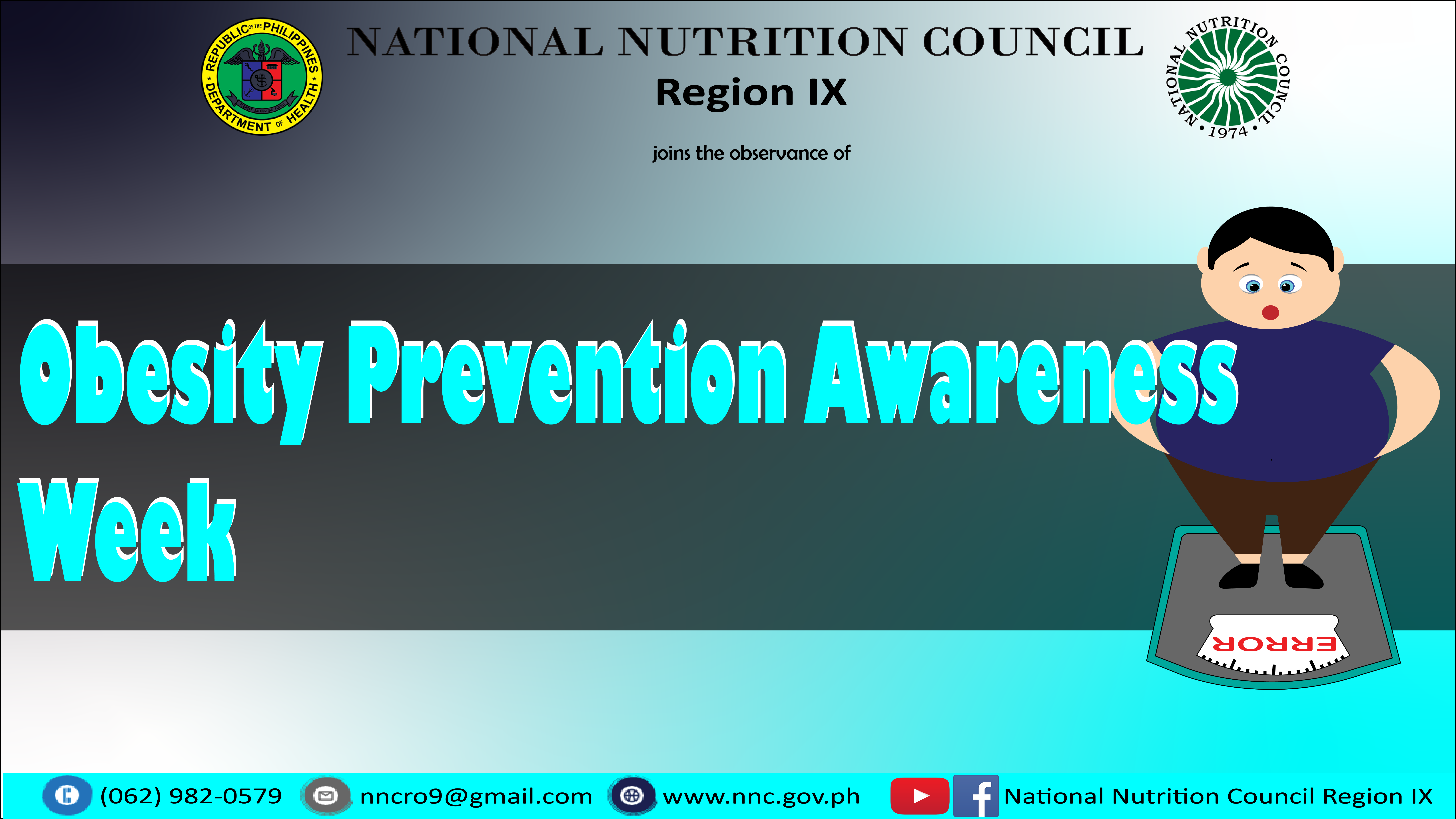
 Obesity Prevention Awareness Week is observed every first week of September under Proclamation No. 162 signed on August 21, 1999 by then-President Joseph Estrada. This proclamation appointed the Philippine Association for the Study of Overweight & Obesity (PASOO) and the Department of Health (DOH) to spearhead this annual health promotion and consciousness-raising regarding obesity in the country.
It is noted that obesity continues to grow to be one of the country’s serious health problems due to the growing addiction to the Western type of lifestyle and diet which affects national socio-economic development. In fact, DOST-FNRI ENNS recorded 28.6% are overweight and 9% are obese among Filipinos 20-59 years of age in 2019. To address this problem, management of obesity should be sought to reduce life-threatening diseases such as heart diseases and type 2 diabetes as well as to improve the quality of life. The declaration of Obesity Prevention Awareness Week is to intensify the knowledge and awareness of the increasingly recognized risks of obesity.
According to World Health Organization (WHO), overweight and obesity are defined as abnormal or excessive fat accumulation that presents a health risk. A body mass index (BMI) over 25 is considered overweight, and over 30 is obese. The treatment methods depend on your obesity severity, your overall health, and your willingness to participate in your weight-loss plan. Reducing calories and choosing healthier eating habits are vital to overcoming obesity. Increased physical activity is also an essential part of obesity treatment. Most people who can maintain their weight loss for more than a year get regular exercise, even simply walking. A behavior modification program can help you make lifestyle changes and lose weight and keep it off. Behavior modification can include counseling with a mental health professional that can help you address emotional and behavioral issues related to eating and joining support groups for obesity. Steady weight loss over the long term is considered the safest way to lose weight and the best way to keep it off permanently. Avoid drastic and unrealistic diet changes, such as crash diets, because they’re unlikely to help you keep excess weight off for the long term. Results don’t come overnight. Work hard and be patient in aiming what you wish for to become fit and healthy. Discipline is the key to achieve your #FITspiration!
PNFP-ZDN Rowence F. Zorilla
References:
1. Proclamation No. 162, s. 1999
https://www.officialgazette.gov.ph/1999/08/21/proclamation-no-162-s-1999/
2. Obesity
https://www.who.int/health-topics/obesity#tab=tab_1
3. Obesity
https://www.mayoclinic.org/diseases-conditions/obesity/diagnosis-treatment/drc-20375749