


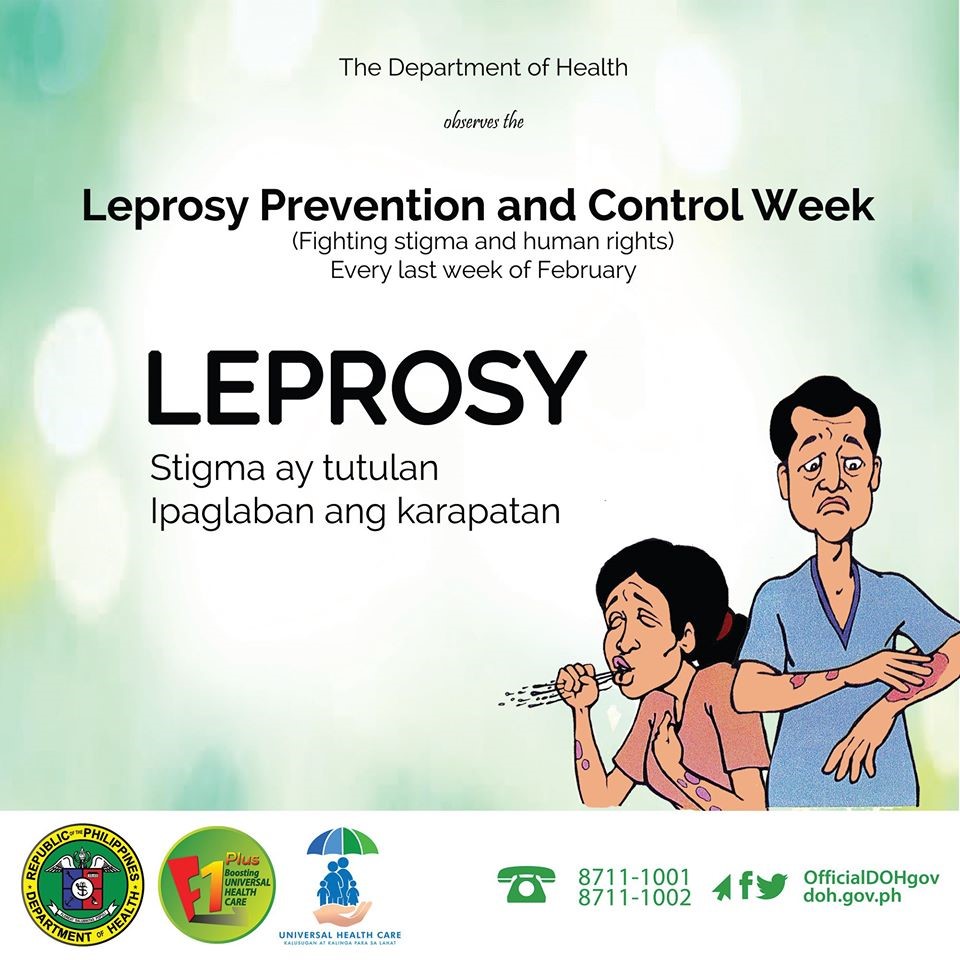
 Leprosy also known as Hansen’s disease is an infectious disease that is caused by a slow-growing type of bacteria called Mycobacterium leprae (M. leprae). The disease causes severe, disfiguring skin sores and nerve damage in the arms, legs, eyes and skin areas around the body. To strengthen the advocacy of spreading awareness of the disease, the last week of February every year has been observed as Leprosy Prevention and Control Week in accordance to Presidential Proclamation no. 467. This year’s theme: “Stigma ay tutulan, Ipaglaban ang Karapatan” aims to deepen public awareness on the disease, its prevention and treatment and protecting the human rights of people infected with Leprosy.
Leprosy or Ketong in filipino is a slow developing, progressive disease that damages the skin and nervous system. Common symptoms that can be seen in the skin are discolored patches of skin, painless ulcers at the sole of the feet, swelling in the face or earlobes and loss of eyebrows or eyelashes. While some symptoms are caused by the damage of the nerves such as numbness, muscle weakness or paralysis, enlarged nerves and eye problems that may lead to blindness. Leprosy is considered mildly contagious. Acquisition of the disease occurs after long term and repeated contact with nose and mouth droplets from someone with untreated leprosy. Children are more likely to get leprosy than adults as they have weaker immune system. According to the data from the Department of Health, the overall prevalence of leprosy is less than 0.4 cases per 10, 000. In 2017 alone, 1,660 new cases were identified with about 6.7 percent of those being children under the age of 15.
Below are some tips to help prevent the spreading and acquisition of leprosy:
- Always cover your mouth and nose when sneezing and coughing
- Avoid frequent personal contact with a person that shows early signs of leprosy
- If symptoms mentioned above are detected, seek medical attention and treatment right away.
- Always consume fresh fruits and vegetables and have a healthy lifestyle to strengthen the immune system
Remember that no illness is acquired by a person by his/her choice thus, no one should be discriminated for being infected with any type of disease. With proper care and intervention, a disease like leprosy can be cured and prevented, hence an infected person still has a chance to live a normal life. Let us help spread awareness of this disease and protect the human rights of people suffering from leprosy.
Together, let us fight the stigma and help prevent Leprosy!
Photo source: www.doh.gov.ph
NO I Angelica O. Pajulas