


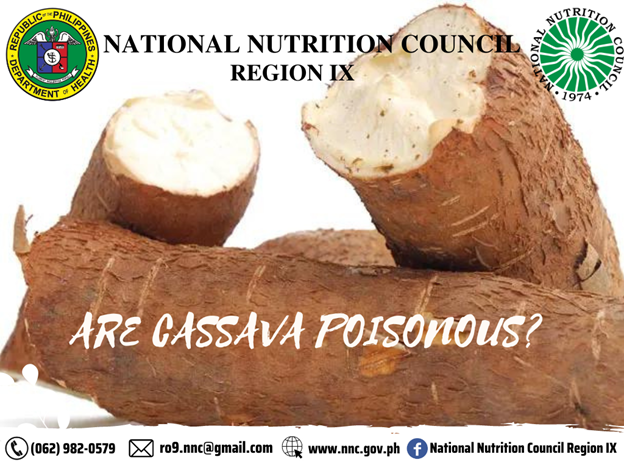
 Filipinos love their cuisine, and the majority of it is known as “kakanin.” This is typically prevalent around holidays, holy weeks, and even significant celebrations like Christmas and New Year’s. However, not all kakanin are suitable for consumption, particularly those containing cassava as the primary component. Many of us, I’m sure, have heard of the risk the cassava tubers pose. We have heard reports of cassava poisoning killing people at parties and causing food sickness in schoolchildren. Examine the threat that this tuber poses to us. Read this post to learn more about this if you’re interested in learning more.
A root vegetable, cassava. The root is consumed by people and used to take medication. Cassava is used to treat fatigue, and dehydration in people with loose stools, and sepsis, and to induce delivery, although there isn’t any rational evidence to back these claims. The roots and leaves of cassava are used as food. Cassava has the same amount of nutrients as a potato. In any event, cyanogenic glycosides are substances found in cassava. These substances can cause the body to release cyanide. Before consuming cassava, it must be properly cooked to prevent cyanide poisoning.
Cassava is a vegetable with a lot of calories, a lot of carbs, and important vitamins and minerals. Thiamine, riboflavin, niacin, and vitamin C may all be found in abundance in cassava. The leaves can contain up to 25% protein, making them too palatable unless someone prepares or sun-dries them.
However, because it contains naturally occurring cyanide in hazardous amounts, people should avoid eating raw cassava. These substances become harmless when cassava has been soaked and cooked. Raw food consumption can have negative health implications. Reports have identified a few risks of eating cassava and consuming too much active cyanide, including paralysis of the legs in children, low levels of iodine, an increased risk of goiter, tropical ataxic neuropathy, which is more common in adults, and causes a loss of feeling in the hands, deficient vision, weakness, walking issues, and the sensation of something being pressed against the body.
Similar to yams and taro, people can use cassava in similar ways to how they would use potatoes. It is possible to create hot items devoid of gluten by using custard starch. Cassava may be a valuable addition to the regular diet as long as people follow safety precautions while preparing it. The main thing is to make cassava in a safer manner. We must properly cook it at the recommended heating temperature.
PDO I Ayesa Gay A. Bejerano, RND
References:
What to know about cassava: Nutrition and toxicity
https://www.medicalnewstoday.com/articles/323756
What makes cassava poisonous?
https://www.philstar.com/news-commentary/2005/03/11/269872/what-makes-cassava-poisonous
Cassava – Uses, Side Effects, and More
https://www.webmd.com/vitamins/ai/ingredientmono-1473/cassava