


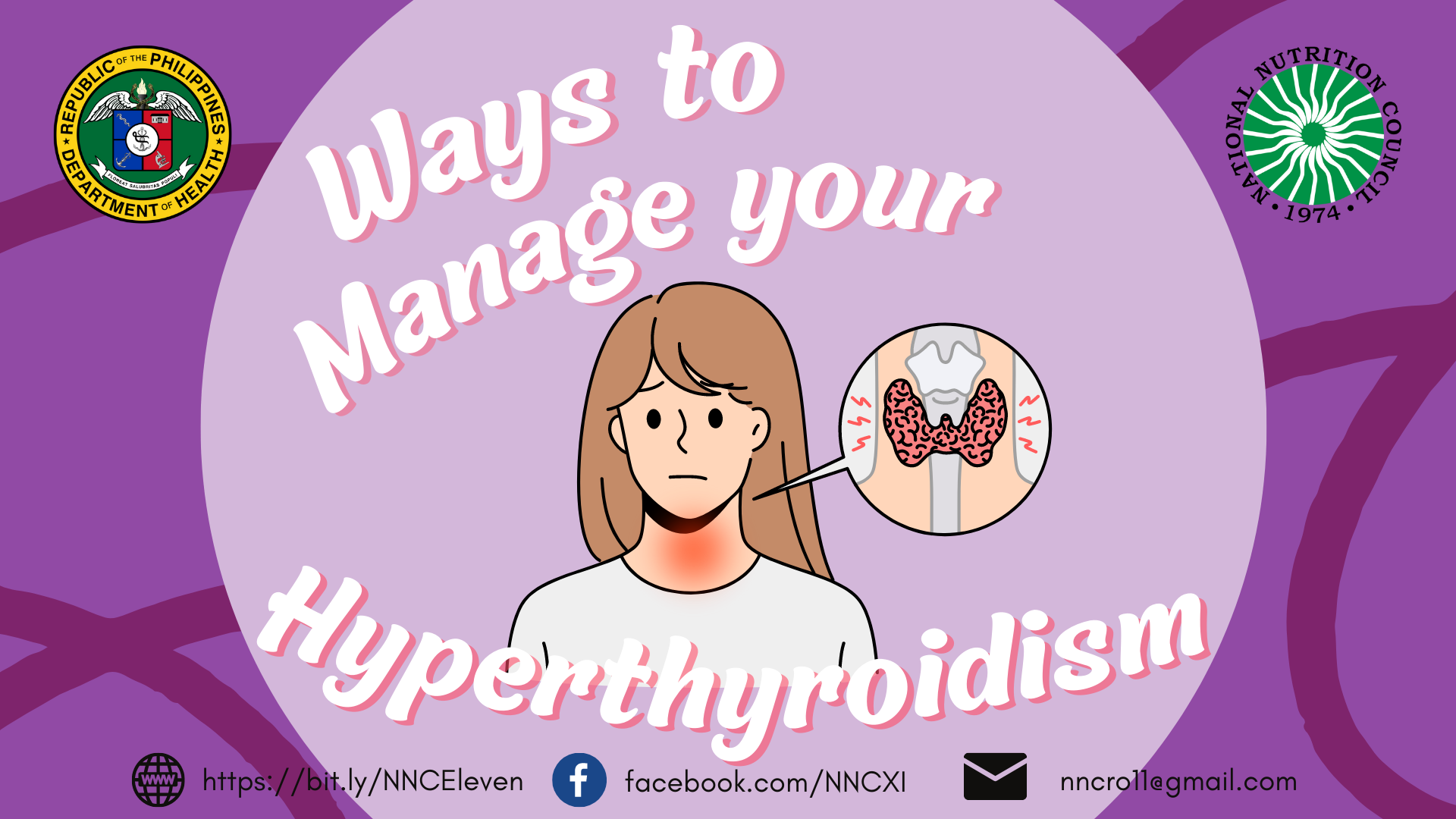
 Hyperthyroidism is a condition that exists predominantly in women. It is an endocrine disorder caused by excessive secretion of the thyroid hormone as a result of overmedication with potent thyroid drugs, hyperactivity of the thyroid gland, or tumor (toxic adenoma of the thyroid). Severe forms are called Grave’s disease (toxic goiter) or thyrotoxicosis. The clinical syndrome is generally called exophthalmic goiter because two-thirds of the patients show exophthalmos (protruding eyes with wide-open lids). The chief symptoms are weight loss, sometimes to the point of emaciation, excessive nervousness, prominence of the eyes and a generally enlarged thyroid gland.
Here are nutrition ways to manage hyperthyroidism
A high-calorie, liberal protein, liberal carbohydrate diet with calcium, phosphorus, vitamin D, and B complex to boost energy production and support increased metabolic activities is recommended. The basic goal of the diet is to compensate for the increased metabolic rate, correct negative nitrogen balance due to tissue breakdown, and prevent bone mineralization.
- Ensure high carbohydrate food intake to replenish depleted liver glycogen stores.
- Consume fruits with antioxidants: e.g. berries such as strawberries, and blueberries.
- Include Cruciferous vegetables in the diet such as broccoli, cauliflower, kale, cabbage
- Emphasize Vitamin D-rich foods such as fish, egg, and mushrooms, to help in the body’s absorption of calcium and phosphorus.
- Consume foods rich in Omega-3 fatty acid such as tuna, walnut, olive oil, flaxseed
- Increase intake of Calcium-rich Foods such as milk and milk products such as cheese.
Avoid the following food items:
- Suspected food allergens such as dairy products, wheat gluten, soy, corn, and artificial food additives;
- High-glycemic carbs such as white flour, sugary sweets, juices, low-fiber cereals, rice cakes, and instant potatoes;
- Unhealthy fats such as red, fried, and processed meats, crackers, cookies, cakes, pastries, and french fries;
- Alcohol and caffeine.
/SKP
References:
MEDICAL NUTRITION THERAPY FOR FILIPINOS, 6th edition, Adela Jamorabo-Ruiz, Virginia S. Claudio, and Esperanza E. de Castro