


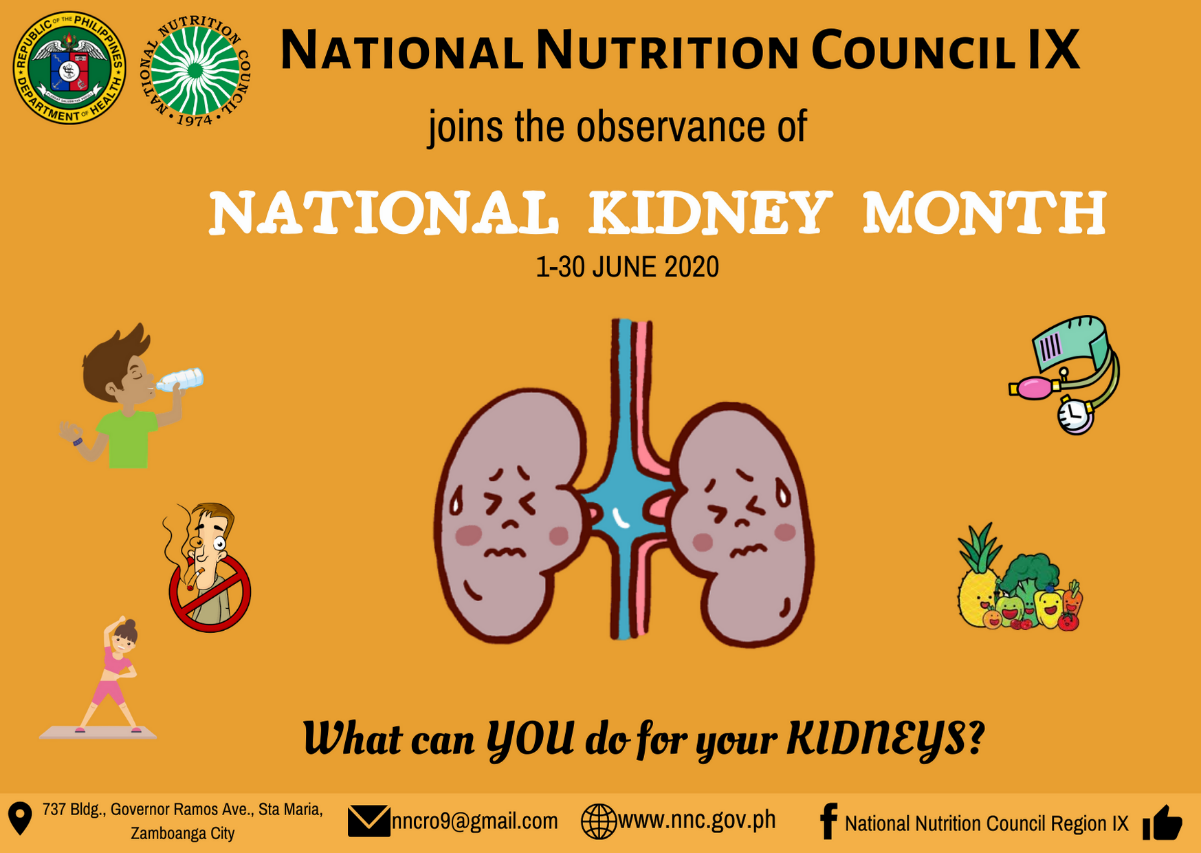
 Did you know how important your kidneys are? These two bean-shaped and fist-sized organs located at the bottom of your rib cage filter waste products, excess water and other impurities from your blood. Imagine what will happen to your body when these organs are not well taken cared of and those waste products are not filtered properly which may cause damage in your kidneys that may disrupt its functions.
By virtue of Presidential Decree No. 184, yearly the month of June is declared as National Kidney Month lead by the National Kidney and Transplant Institute (NKTI) with this year’s theme “Malusog na Bato sa Panahon ng Pandemya” to highlight the importance of keeping a healthy kidney even during this time of COVID-19 pandemic.
Kidney diseases are silent killers, which can largely affect your quality of life. Inside each kidney are about a million of tiny structures called nephrons that filter the blood, remove wastes and extra water, which become urine. Most kidney diseases attack these nephrons that may result your kidneys unable to remove waste products. Kidney damage may be caused by diabetes, high blood pressure, and other various chronic long-term conditions. Kidney disease can also lead to other health problems including weak bones, nerve damage and even malnutrition. The most common type of kidney disease is the Chronic Kidney Disease (CKD), a long-term health condition that is commonly caused by high blood pressure. If the disease gets worse over time, your kidneys may stop working completely, therefore, a dialysis will be required to help the kidneys filter and purify the blood by using a machine. This treatment doesn’t cure kidney disease, but it can prolong your life.
In order to avoid these life-threatening effects, you must know how to protect your kidneys through observing proper prevention and detection measures. Here are some ways of what you can do for your kidneys to reduce the risk of developing kidney diseases:
- Keep being active and fit – This can help you maintain your ideal body weight, reduce your blood pressure and improve your heart health.
- Eat a healthy diet – Limit your intake of salty, fried, fatty and sugar-rich foods to avoid long-term health conditions that may be associated with kidney diseases. Focus on eating fresh ingredients that are naturally low in sodium.
- Check and control your blood sugar and blood pressure – People with diabetes and high blood pressure may develop kidney damage, however if you regularly check and control your blood pressure and blood sugar level, you can reduce or prevent the risk of additional damage.
- Do not smoke – Smoking damages your body’s blood vessels. This leads to slower blood flow throughout your body and to your kidneys.
- Drink plenty of fluids – Water helps clear sodium and toxin from your kidneys and lowers your risk of CKD. An individual’s right level of fluid intake depends on many factors such as climate, exercise, health condition, pregnancy and breastfeeding. Aim for at least 1.5 to 2 liters or 6 to 8 glasses in a day to stay hydrated.
Maintaining a healthy kidney healthy is important to your overall health and general well-being. Even if you don’t have any of the risk categories, it is still important to take good care of your kidneys and other organs to ensure and achieve an optimal health.
NO I Angelica O. Pajulas