


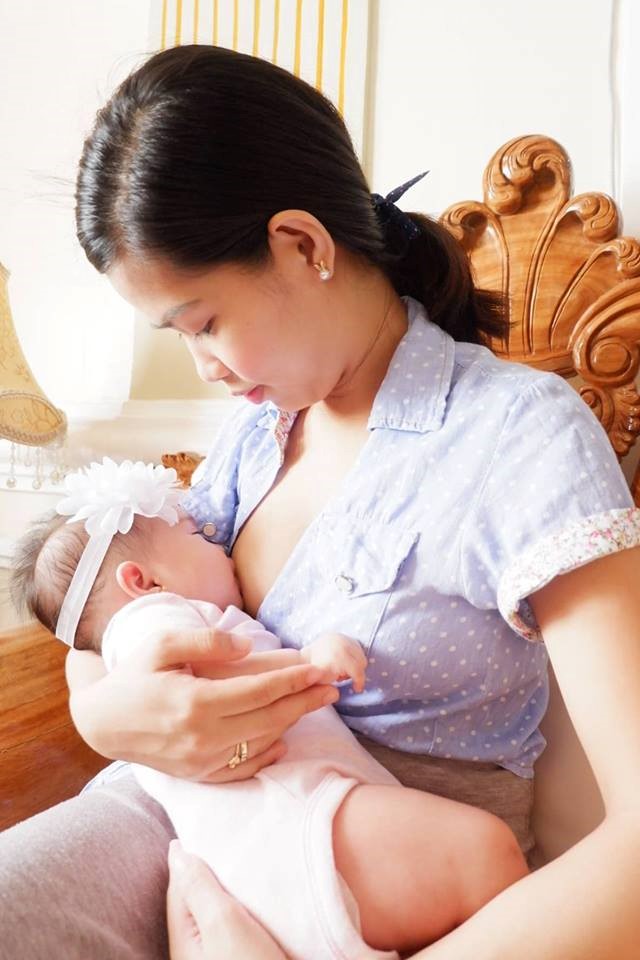
 Nowadays, social media plays a big role in influencing of what is right and what is wrong and eventually putting everything into society’s norm. It is like normalizing the unconventional ways or it could be the reverse way and breastfeeding campaign is not exempted. Breastfeeding campaign is still one of the challenges needed to be hurdled in the Philippine setting. Philippines posted a 48.8% rate on exclusive breastfeeding while Region VIII posted a 60.8% based on the recent FNRI-DOST 8th NNS,2015. One of the main reasons why we still have low rate on exclusive breastfeeding because promotion of formula milk is very rampant in all forms and one example is the continuous commercial airing on national televisions. It is somehow saddening to know that milk companies are willing to pay big chunks of money just to promote their products and usually they have longer air time on national televisions as compared to the breastfeeding campaign on air by the national governments. But don’t be discouraged as the national government and its partner stakeholders are scaling up the nutrition actions as promotion of breastfeeding is given emphasis and importance. Through the current National Nutrition Council Program, Early Childhood Care and Development – First 1000 Days (ECCD – F1K), breastfeeding is advocated in all education classes conducted nationwide wherein breastfeeding together with the good health and nutrition status of mother and a baby is the best prevention against all forms of malnutrition. It takes a lot of resistance from the mother being peer pressured not to breastfeed their babies but eventually breastfeeding wins because through proper education, the mother gained a better understanding and knowledge on breastfeeding. Breastfeeding served as the first gateway of the child to have a complete nutrition and good health and well-being to be a productive and effective constituent of the country.
Exclusive breastfeeding means that a child takes no food, water or other fluids in the first 6 months of life. Breastfeeding is diet of only breast milk – the best for infants up to 6 months of age. Breastfeeding can be done as often as the baby wants or breastfeed on demand wherein a baby should be fed on demand at least eight (8) times in 24 hours, day and night in order to be adequately nourished. Here are the following advantages and benefits of breastfeeding:
1. Breast milk contains all the necessary nutrients for growth and development of the baby. Also, breastmilk contained essential fatty acids used for infant’s developing brain, eyes and blood vessels that are not found in formula milk.
2. Breast milk’s nutrients are more easily absorbed than formula milk.
3. Breast milk provides all the liquid an infant needed even during hot and dry season.
4. Breast milk gave protection against infection and babies are less likely to develop diseases such as pneumonia, diarrhea, meningitis, and ear infections. Also helps in the prevention against non-communicable diseases later in life.
5. Breastfeeding is readily available for the baby, very convenient to mothers at the same time economical and practical.
6. Breastfeeding not only benefited the baby but also the mothers wherein it helps the uterus to return to its previous size after giving birth, helps reduce bleeding and prevent anemia. Also decreases the chance of mothers to have breast and ovarian cancer later in life.
7. Breastfeeding helps develop a close, loving maternal bond between mother and infant.
8. During emergencies, breastfed infants are food secure.
Indeed, breastfeeding is the key to have a good health and nutrition status that eventually geared up the infants to have a better chance of winning in life! Now, the breastfeeding advocacy can be techie to get the attention easy. (NO III Sharmie Nicole Tansingco)
Source: National Nutrition Council (2017). Idol ko si Nanay- Learning Sessions for the First 1000 days of Life: A Facilitator’s Guide. pp 60-64