


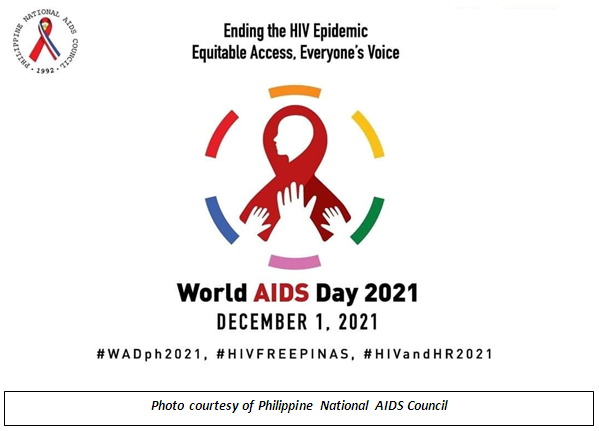
 PALO, Leyte – World AIDS day was first observed on December 1, 1988, to raise awareness on the alarming rise Human Immuno-deficiency virus (HIV) among individuals worldwide. It was since then that the world observed annually.
The World Health Organization (WHO) states that the main agenda this year is to highlight the growing inequalities in access to essential HIV services around the world. It further states that the division, disparity, and disregard for human rights are among the failures that allowed HIV to become and remain a global health crisis.
This year, WHO and AIDS organizations are calling on global leaders and citizens to rally to confront these inequalities that drive AIDS and to reach people who are currently not receiving essential HIV services.
In simple terms, it is a condition that comes when the immune system stops working completely. The virus lives in human blood, sexual fluids, and breast milk and when left untreated, it leads to AIDS (Acquired Immune Deficiency Syndrome).
It is spread by contact with certain bodily fluids of a person with HIV, most commonly during unprotected sex, or through sharing injection drug equipment.
|