


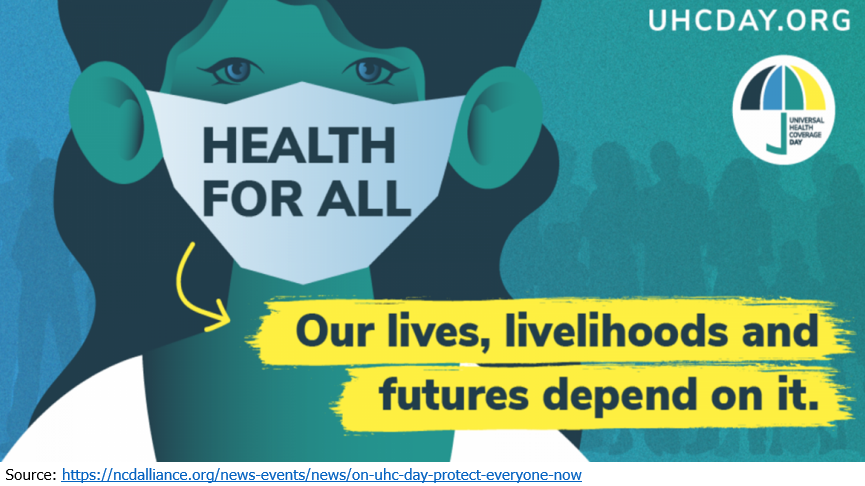
On 12 December 2012, the UN General Assembly (UNGA) endorsed a resolution urging countries to accelerate progress toward universal health coverage (UHC) – the idea that everyone, everywhere should have access to quality, affordable health care – as an essential priority for international development. On 12 December 2017, the United Nations proclaimed 12 December as International Universal Health Coverage Day (UHC Day) by resolution 72/138. International Universal Health Coverage Day aims to raise awareness of the need for strong and resilient health systems and universal health coverage with multi-stakeholder partners.
The theme of UHC Day 2020 is “Health for all: protect everyone. To end this crisis and build a safer and healthier future, we must invest in health systems that protect us all — now” UHC Day Campaign on 12 December 2020 will mark one year since the first cases of COVID-19 were reported. Each year on 12 December, UHC advocates raise their voices to share the stories of the millions of people still waiting for health, champion what has been achieved so far, call on leaders to make bigger and smarter investments in health, and encourage diverse groups to make commitments to help move the world closer to UHC by 2030.
COVID-19 struck only a few months after world leaders endorsed the landmark Political Declaration on UHC – committing to accelerate efforts towards the achievement of universal health coverage so that everyone can access the health services they require, when and where they need them, without suffering financial hardship as a result. The pandemic is testing our resolve to deliver health for all and threatens to undo decades of progress. It has disrupted the delivery of essential health services in many countries, stretched resources to the limits, and revealed the impact of decades of underinvestment in primary care and essential public health functions.
A series of pulse surveys conducted by the World Health Organization reveal slow-downs and setbacks in delivering key health services and reaching globally agreed targets. Initiatives to boost immunization, sexual and reproductive health, maternal and child health, care for the aging, and to end diseases have all been negatively impacted. This puts additional pressure on vulnerable population groups with unmet health needs. Even before the crisis, at least half of the world’s population did not have full coverage of essential health services, and about 100 million people were pushed into extreme poverty because they have had to spend on health care beyond their ability to pay.
In the Philippines, Universal Health Care (UHC) Act or Republic Act No. 11223, also referred to as Kalusugan Pangkalahatan (KP), is the “provision to every Filipino of the highest possible quality of health care that is accessible, efficient, equitably distributed, adequately funded, fairly financed, and appropriately used by an informed and empowered public”. President Duterte has signed the Bill into Law last year which automatically enrolls all Filipino citizens in the National Health Insurance Program and prescribes complementary reforms in the health system.
The UHC Act aims to improve the three pillars of health systems for universal health coverage – a joint vision for healthy lives (joint vision): service delivery, health financing, and governance. However, with the ongoing Pandemic and the series of crises that struck PhilHealth, the government must step in to make UHC work for all Filipinos by ensuring that the country has dependable health insurance coverage, it is sustainable and free from corruption. It must also see to it that health institutions such as hospitals are following the law and that no one is denied immediate medical attention just because they are poor. #LeoChristianLauzon